
Fiction - Fantasy & Magic, Fiction - Emotions & Behaviors, Fiction - Schools & Friendship, Fiction - Horror, Monsters & Ghosts
Log in to track your reading progress.
Overview
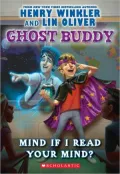
Billy and Hoover are back in the hilarious new series from bestselling authors Henry Winkler and Lin Oliver!
It's time for Moorepark Middle School's annual Speak Out Challenge, and Billy Broccoli thinks he's got it made. With his best friend Hoover Porterhouse-the ghost with the most-by his side, Billy's got the competition in the bag. Who wouldn't vote for a demonstration on mind reading?
But when Billy lands a spot on the seventh grade team, he starts spending more time with his new teammates than he does with Hoover. And the Hoove plays second fiddle to no one! If Billy's not careful, his secret weapon might just vanish into thin air, leaving Billy to pick up the pieces of a demonstration day disaster!
Editorials
From the Publisher
"Fantastical, suspend-your-disbelief, rollicking and very funny."School Library Journal on Hank Zipzer #2: I Got a D in Salami
Children's Literature -
In this second installment in Winkler and Oliver's new series "Ghost Buddy," eleven-year-old Billy Broccoli (the neighborhood bully calls him "Cheese Sauce") lives in a recently blended family with his principal mom, dentist stepdad, annoying new stepsister, and a fourteen-year-old, highly opinionated ghost named Hoover Porterhouse III ("the Hoove"). The "Higher-Ups" have told the Hoove that he needs to get a passing grade on his ghost report card in his weakest subject: helping others. So the Hoove decides to assist Billy in a classroom talent contest by convincing Billy to showcase his supposed gift of mindreading: Billy appears to read his classmates' minds when the Hoove feeds him a steady stream of information about what the other kids are really doing when they are supposed to be paying attention in class. Billy wins acclaim for his psychic prowess and makes two new friends as a result, but realizes by the end of the story that he does not deserve success based on lies and that true friends will like him for himself. Winkler and Oliver judge Billy a big harshly for his deceptive showmanship: what is any magic trick but fakery? But the story abounds with zany humor, from gross dinner-table conversation about flossing with Billy's earnestly clueless stepdad, to nonstop banter between Billy and the Hoove, to pleasingly predictable disasters from mind-reading malfunctions. As in their popular "Hank Zipster" series, Winkler and Oliver once again deliver an appealing mix of over-the-top slapstick humor and big-hearted, innocent sweetness. Reviewer: Claudia Mills, Ph.D.School Library Journal
Gr 4–6—When 11-year-old Billy Broccoli and his blended family move to a new home, he finds that he must share his bedroom with Hoover Porterhouse III, a 14-year-old ghost who has been dead for 99 years. The Hoove is stuck with Billy until he can prove to the almighty "Higher Ups" that he can be helpful and caring. He's cocky and self-assured, while Billy is insecure and shy. At middle school, Hoove tries to show him some smooth moves by steering him away from wearing panda bear T-shirts and advising him on how to compliment girls. When Billy learns that he must take part in SOC, the Speak Out Challenge, he is a nervous wreck. The theme for everyone's talk is, "Demonstrate Something Special You Can Do." Billy wracks his brain but can't come up with anything better than reciting the alphabet backwards. The Hoove, knowing that this will be a major social blunder, comes up with a better idea: mind reading, with a little behind-the-scenes help from the snoopy ghost. At first, Billy feels guilty about his fake talent, but he starts enjoying himself when it leads to newfound popularity. Winkler and Oliver pepper the story with nonstop humor: Billy's stepfather, who is a dentist, thinks he should demonstrate flossing for his talk, entitled "Floss-O-Rama." Some of the funny parts tend to be overly explained-the jokes might be more effective without so much exposition. The ending winds up endearingly, with both ghost and boy learning what it means to be a caring, thoughtful friend.Diane McCabe, John Muir Elementary, Santa Monica, CAKirkus Reviews
A sixth-grader and his live-in ghost further cement their friendship while bootstrapping each other toward better social skills in this airy sequel to Zero to Hero (2012). This time the ghost takes center stage. Dead teen and compulsive prankster Hoover "the Hoove" Porterhouse has but one last chance to earn a passing mark from Higher-Ups in Helping Others and Responsibility to be set free to realize his life- (and death-) long dream of visiting every Major League ballpark in the country. When an upcoming school assignment that requires showing some personal skill sends his shy, breathing buddy Billy Broccoli into a terrified tizzy, the Hoove's "help" with a fake mind-reading act boosts Billy's public status from outsider to awesome. Carrying its messages lightly, the tale ultimately leaves the Hoove with better impulse control even as it moves Billy to twin realizations that cheating is neither good for building self-respect nor the best way to make friends. Highlights include a pair of misty Field of Dreams–style exchanges with the one-and-only Yogi "You can observe a lot by watching" Berra. The cast is thoroughly likable (even the requisite bully will earn reader sympathy, if only for being so gormless). A go-down-easy book that provides both lightweight character building and several comical turns. (Fantasy. 10-12)Book Details
Published
July 1, 2012
Publisher
Scholastic, Inc.
Pages
176
Format
Paperback
ISBN
9780545298834