
American Fiction, Short Story Collections (Single Author), Asian Americans - Fiction & Literature
Log in to track your reading progress.
Overview
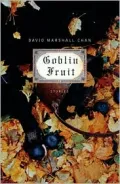
In the provocative title story an ambitious young actor assumes the identity of his dead brother, killed in a notorious Hollywood film accident. "Brilliant Disguise" tells the story of an Asian American masked wrestler, while in "Lost Years" two brothers must adopt false names while on the road and on the run. Whether portraying the hapless erosion of innocence or the musings of young men longing to be something other - a boy detective, a Jehovah's Witness, a swan - the stories in Goblin Fruit announce a distinctive literary voice shaped by the pop dreams and cultural divides of a Los Angeles forever transformed by the writer's subtle craft.Editorials
Blackbook
This debut collection of short stories takes the well-worn themes of searching, losing, and assuming one’s identity and tightens the screws. Goblin’s finely woven perspectives—a struggling Asian actor, a brother taking his dead kin’s name—are conveyed with a powerful simplicity. The twisted screenplays, L.A. set pieces, and pop references may be familiar, but Chan’s voice is remarkably distinct.The Los Angeles Times
“The ‘goblin fruit’ that lends itself to the title of David Marshall Chan's appealing story collection is a plot device used by an aspiring Chinese American child actor in his hilariously lamebrained screenplay. The cute goblins, it turns out, feed children the delicious goblin fruit, causing them to forget who they are. Chan's narrator is forever on the verge of losing his own slippery identity. Goblin Fruit is an episodic coming-of-age tale about a kid who's more comfortable with the notion of high concept than he is with himself, told in a voice that's appropriately gossipy, willfully shallow, often very funny, and occasionally haunting. It plays out against a Los Angeles of medflies and Scientology, perfumed with a breezy soundtrack by Fleetwood Mac and Gram Parsons and dotted with grim recent history: the Manson murders, the death of Vic Morrow in a botched helicopter stunt. Throughout, there are doppelgangers galore (a boy whose name is the same as a murder victim, a father who plays two professional wrestling villains) and recurring dreams: of, most significantly, being a teen detective a la the Hardy Boys. This fantasy of underground caves and hidden treasures is a colorful two-dimensional stand-in for the boringly real. In Chan's hands, it's a zinger of a metaphor for growing up in L.A., that place of escapism that "existed only to be escaped.”The New York Times
“In Goblin Fruit David Marshall Chan offers up melancholy fables from a pop-culture California childhood. For Chan, writing is the breadcrumb trail leading out of the dark forest of adulthood into the brighter but no less sinister light of youth. Inspired by fairy tales as well as more modern mythologies, Goblin Fruit centers on transformation. An actor assumes the identity of his brother, killed years ago on a movie set; an Asian American teenager recreates himself as a boy detective; seven Chinese brothers metamorphose into seven swans. These tales rarely follow a traditional narrative path … but [Chan’s] images remain haunting: ashes from a fatal apartment fire, falling like snow; a cloud of red ladybugs loosed from a can (“A dazzling waterfall of reds and oranges and shades in-between showered down onto the sidewalk in slow motion, a slow parade of winged marchers falling through the air”). Los Angeles has always been a city bathed in fantasy; in Chan’s hands, however, the prevailing mood is less Disney than Grimm.”Publishers Weekly
Chan's dreamy, nostalgic debut story collection draws out the experience of growing up Asian-American in Southern California. A number of the pieces deal with loss and mourning; the obscure young Asian actor in the title story reflects on his failing career while replaying the death of his brother, a child movie star who perished during a helicopter crash while shooting a film. "Open Circles" follows a boy as he watches his brother drift into mental illness, while the narrator of "Falling" recalls blissfully aimless high school afternoons he spent with his best friend, a reckless and vaguely self-destructive boy who vanished several years later and is now rumored to be dead. Elsewhere, Chan is more lighthearted: "Mystery Boy" turns a young boy's memories of his days as an imaginary childhood sleuth into a poignant ode to the era of boy detectives in young adult literature. "Brilliant Disguise" is a tongue-in-cheek coming-of-age yarn about a boy who tries to escape the publicity stemming from his father's career as a cartoonish professional wrestler. Chan produces some luminous passages, capturing the golden haze that swaths childhood memories-even only moderately happy ones. His best characters and premises are appealingly quirky, but some stories simply fall flat, burdened by overly obvious plot trajectories and character descriptions (Jon, the boy who disappears in "Falling," would "get eyestrain staring at the ghostly figure captured standing on the balcony on the cover photo of the Hotel California album, wondering how it got there"). Chan is a promising newcomer, but he has yet to find a consistent, sure voice. (Jan. 6) Copyright 2002 Cahners Business Information.Library Journal
This debut collection by Los Angeles native Chan often uses childhood and youthful innocence as a starting point to weave together tales of loss, dislocation, and imagination. Some stories, including the title story, "Open Circles," and "Falling," take the death of a close friend or the loss of siblings and meditate on the role of memory and identity as the narrator looks back on his youth, still trying to come to grips with what has happened. In the longest piece, "Mystery Boy," the narrator places himself within the WASPish world of the Hardy Boys mystery series and remarks on the thrill of solving mysteries with a childlike innocence, which seems to be fading as the real world and maturity overtake youth and dreams. Often, the narrator is from a family still steeped in Chinese culture and is left with the difficult task of trying to figure out his place in contemporary America. Full of haunting images, Chan's prose is subtle, and though a chronological narrative may provide the underpinnings of a story, random images, fairy tales, and dreams lead the tale down strange paths that then circle back to the original story from a different direction. A solid short story collection from a new author, this is recommended for all libraries.-Jim Coan, SUNY Coll. at Oneonta Copyright 2003 Cahners Business Information.Book Details
Published
January 1, 2003
Publisher
Context Books
Pages
214
Format
Hardcover
ISBN
9781893956322