
History of Biology & Life Sciences, Biologists - Biography, Genetics - General and Miscellaneous, History of Science
Log in to track your reading progress.
Overview
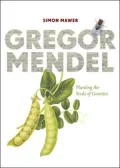
Considered one of the greatest scientists in history, Gregor Mendel was the first person to map the characteristics of a living thing's successive generations, thus forming the foundation of modern genetic science. In Gregor Mendel, distinguished novelist and biologist Simon Mawer outlines Mendel's groundbreaking research and traces his intellectual legacy from his discoveries in the mid-19th century to the present.In an engaging narrative enhanced by beautiful illustrations, Mawer details Mendel's life and work, from his experimentation with garden peas through his subsequent findings about heredity and genetic traits. Mawer also highlights the scientific work built on Mendel's breakthroughs, including the discovery of the DNA molecule by scientists Watson and Crick in the 1950s, the completion of the Human Genome Project in 2003, and the advances in genetics that continue today.
Editorials
Library Journal
Novelist (Mendel's Dwarf) and biologist Mawer clearly draws on both of his professions in this brief, illustrated portrait of Austrian monk Gregor Mendel's genetic experiments. The book's first half is devoted to retelling Mendel's life story, with Mawer often taking artistic license to set a dramatic tone (e.g., Mendel's first lectures are described as taking place on a dark, chilly evening during which Mendel paced nervously). None of these details detracts from the story in fact, they create an intimacy that immediately draws in the reader. In the second half, the author skillfully explains genetics at a level for non- or burgeoning scientists. The text is lavishly illustrated with photographs (both contemporary to Mendel and current), document reproductions, sketches, paintings, genetic diagrams, and colored botanical art plates. Although the storytelling style is similar to Robin Marantz Henig's The Monk in the Garden, the sheer volume and the diversity of the images set this book apart. Recommended for academic and public library general science collections. Marianne Stowell Bracke, Univ. of Arizona Lib., Tucson Copyright 2006 Reed Business Information.Book Details
Published
September 28, 2006
Publisher
New York : Abrams, in association with the Field Museum, Chicago, 2006.
Pages
176
Format
Hardcover
ISBN
9780810957480