
Education - Early Childhood for Parents, Child Rearing & Development, Family & School - General & Miscellaneous, Infants & Toddlers - General & Miscellaneous
Log in to track your reading progress.
Overview
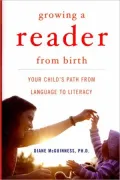
An essential guide to understanding children's language from the first days of babbling through a five-year-old's mastery of reading.How children learn language is an endlessly fascinating subject, with new research revising our views every day. In Growing a Reader from Birth, seasoned researcher Diane McGuinness reviews the latest findings on just how much infants, toddlers, and preschoolers know and are capable of expressing from the early months on. Chapters covering each year of a child's language growth link this new knowledge to McGuinness's own innovative program for children's mastery of reading. She charts how a child first makes sense of the world of sound and symbols and then progresses from recognizing and decoding words to developing a vocabulary and using it to become a good listener, an expert reader, and an eloquent speaker. Growing a Reader from Birth not only illuminates the stages of language learning in children but also equips parents with indispensable advice on how to maximize their interactions with their children and be a positive force in nurturing their child's language from day one.
About the Author:
: Diane McGuinness, Ph.D., is the author of When Children Don't Learn and Why Our Children Don't Read and What We Can Do About It.
Editorials
Publishers Weekly
McGuinness (Why Our Children Don't Read and What We Can Do About It) points out that being a good reader involves much more than simply decoding words; she claims that the best predictor for becoming a good reader is the development of good language skills during the early years of life. Fortunately, the author notes, there are many ways in which parents can help children lay the groundwork for later reading success, and although about 50% of a child's verbal skill can be attributed to genetics, the other 50 is the result of "shared environment," or what the child learns at home. McGuinness guides parents through the first five years of the child's life, highlighting language milestones and suggesting ways parents can nurture verbal abilities. For instance, parents who engage in an "elaborate" communication style use interactive dialogue, employ descriptive language and encourage the child to participate. Parents who use a "repetitive" style, however, are not setting their child up for reading success; they use impoverished language and question their child repetitively until a desired response is given. The book is not a typical reading primer: McGuinness cautions against such timeworn tools as picture books (they "distract" the child from memorizing a story sequence), rhyming games and preschool (which may benefit neither language nor literacy, she asserts). Parents seeking quick, easy tips won't find them here, but they will find novel suggestions for building a solid literacy groundwork during the prereading years. (Jan.) Copyright 2003 Reed Business Information.Library Journal
While most books on emerging literacy discuss preschoolers and older children for educators, McGuinness (Why Our Children Don't Read and What We Can Do About It) shows parents how to maximize positive verbal and social interactions with their child from birth to age five. Devoting a chapter to each year of a child's language development, her book allows parents to focus on their child's specific abilities and provides a broad overview of how children become readers. While McGuinness recognizes that each child learns differently, she insists that literacy begins in the womb, not when a child enters school. She also dispels many common myths about how children learn to read. For instance, decoding (recognizing the letters and their sounds) is only a minor part of the reading process; listening comprehension (the ability to understand what someone says) is in fact the most powerful predictor of reading aptitude. Including additional resources (e.g., literacy programs to purchase for home or classroom use and further reading), this is highly recommended.-Charity S. Peak, Regis Univ., Colorado Springs Copyright 2004 Reed Business Information.Book Details
Published
February 25, 2004
Publisher
W. W. Norton & Co.
Pages
224
Format
Hardcover
ISBN
9780393058024