
United States History - 20th Century - General & Miscellaneous, Labor Leaders, Activists, & Social Reformers, Diplomatic Relations, United States History - 20th Century - 1945 to 2000, Terrorism, Historical Biography - United States, True Crime, United St
Log in to track your reading progress.
Overview
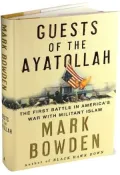
"The Iran hostage crisis was a watershed moment in American history. It was America's first showdown with Islamist fundamentalism, a confrontation that has remained at the forefront of American policy to this day: In Iran, following the ouster of the shah, a provisional government was established, and for a critical moment in the modern age's first Islamist revolution, a more open and democratic society seemed possible. But the religious hardliners on the Revolutionary Council used the hostage crisis as an opportunity to purge moderates from the leadership ranks. They altered the course of the revolution and set Iran on the extreme path it follows to this day." "The Iran hostage crisis was also a dramatic story that captivated the American people. Communities across the country launched yellow-ribbon campaigns. ABC began a new late-night television program - which became Nightline - recapping the latest events in the crisis and counting up the days of captivity. The hostages' families became celebrities, and the never-ending criticism of the government's response crippled Jimmy Carter's reelection campaign." Guests of the Ayatollah tells this story through the eyes of the people who lived it, on both sides of the crisis. Mark Bowden takes us inside the hostages' cells, detailing the Americans' terror, confusion, boredom, and ingenuity in the face of absurd interrogations, mock executions, and a seemingly endless imprisonment. He recreates the exuberance and naivete of the Iranian hostage takers. He chronicles the diplomatic efforts to secure the hostages' release and offers a remarkable view of President Jimmy Carter's Oval Office, where the most powerful man in the world was handcuffed by irrational fanatics halfway around the world. Throughout this all, Bowden weaves the dramatic story of Delta Force, a new Special Forces unit poised for their first mission, Operation Eagle Claw.Editorials
From Barnes & Noble
On November 4, 1979, scores of Iranian students scaled the walls of the U.S. embassy in Tehran, beginning a hostage crisis that would last 444 days and cost President Jimmy Carter his reelection. Twenty-five years later, this major event in American history seems both distant and oddly immediate. As Mark Bowden notes in this extraordinary book, the Iranian hostage crisis was America's first showdown with Islamic fundamentalism. The author of Black Hawk Down spent five years reconstructing the incident, re-creating it through the eyes of the terrified hostages and their radical, naïve captors. In Guests of the Ayatollah, he takes us into Oval Office consultations, exposes the startling truth behind October Surprise rumors, and tracks the fragile clandestine negotiations that led to the prisoner releases.Afshin Molavi
… Bowden skillfully evokes the era and the ordeal, putting a human face on the yellow ribbons. And he describes in detail President Carter's vacillations, the failed rescue attempts, and the charlatans and apologists who acted as private intermediaries to seek the hostages' release (and their own photo ops).— The Washington Post
Janet Maslin
Mr. Bowden reaffirms his role as tough-guy Cassandra with this hefty replay of the hostage crisis in Iran that began in 1979. Invoking Philip Roth's great aphorism about hindsight ("the terror of the unforeseen is what the science of history hides"), Mr. Bowden returns to that pivotal 444-day ordeal and reconstructs it with painstaking care.— The New York Times
Publishers Weekly
Bowden, whose Black Hawk Down won him a National Book Award nomination, turns his sights to the 1979 Iran hostage crisis. The audio abridgment is generally smooth, though it's often difficult to keep the cast of characters straight: 66 original hostages, dozens of Iranian captors and untold numbers of diplomats, bureaucrats and family members. On audio, such a dizzying array of stories and backstories can become confusing. Bowden is a capable and competent narrator; while there are no tour de force performances here, the reading is solid and consistent, with no annoying vocal tics or other distractions. The real bonus of the audio over the print version is the final disc, which contains several visual enhancements: a PDF map of the embassy compound; a map of Iran, with markings not only for cities but also the landing site of the ill-fated 1980 rescue mission; and, most impressively, almost nine minutes of footage from the Discovery Channel's four-part documentary Guests of the Ayatollah, featuring compelling interviews with surviving members of the rescue team. Simultaneous release with the Atlantic Monthly hardcover (Reviews, Apr. 17). (May) Copyright 2006 Reed Business Information.Library Journal
According to his publisher, Bowden (Black Hawk Down) took five years to write this book. It wasn't long enough. His account of the Iran Hostage Crisis is overwritten, sloppy in detail, and seemingly endless. He begins with prose not unlike that of the pulp novels that Garrison Keillor's "Guy Noir" satirizes, and by the time his writing becomes less turgid the reader realizes with horror that there still remains an arduous 500-page slog ahead. Bowden faults the media for failing to explain Iranian hatred of America, but beyond the briefest description of the 1953 CIA-backed coup, he does no better-unlike David Harris in his excellent The Crisis: The President, The Prophet, and the Shah-1979 and the Coming of Militant Islam, a lucid and comprehensive exploration of the tensions in Iran. Already, there is a shelf of books on this topic, many by insiders such as the American charg , the leader of the failed rescue mission, and President Carter's chief of staff. The need for another book is unclear. Though it is a quarter-century old, Robert D. McFadden's No Hiding Place: The New York Times Inside Report on the Hostage Crisis is concise, readable, and far better. Not recommended. [See Prepub Alert, LJ 1/06.]-Michael O. Eshleman, Kings Mills, OH Copyright 2006 Reed Business Information.Kirkus Reviews
A riveting account of the 444-day Iran hostage crisis of 1979-81. Bowden's (Road Work, 2004, etc.) contention that the capture of the U.S. embassy in Tehran was "the first battle in America's war against militant Islam" needs qualification, for America had been battling by proxy for years. Still, it was the first direct assault on Americans in strength. Those who undertook it viewed the Cold War superpowers as equally evil-surprisingly, the so-called "Muslim Students Following the Imam's Line" had first planned to take over the Soviet embassy in Tehran-and wanted to guide their nation, freshly rid of the much-hated Shah and now governed by a conservative Islamic theocracy, away from Western modernism and toward some recapitulation of the medieval golden age. Led by an inner circle called The Brethren, the militants who stormed the embassy on Nov. 4, 1979, initially planned to stay for three days and broadcast their grievances; once it became apparent that the Ayatollah Khomeini's government was not going to eject them-and the attack, it seems, took most of the mullahs by surprise, too-they stayed on. Using the same you-are-there point of view as he did in Black Hawk Down (1999), Bowden introduces figures on both sides of the struggle: American staffers who revered Persian culture and spoke the language fluently; humorless bureaucrats; gung-ho Marine guards and hardcore Delta Force types; Islamic ideologues convinced-and not without cause-that all Americans in Iran worked for the CIA; real-life students who, after a year of hostage-keeping, came to regard the enterprise as a mistake and drifted away; and, least likable of all, the Tokyo Rose-like Iranian interpreter who to this day insistson the justice of her actions and of the Islamist cause. It's a big book not to put down, but Bowden's latest will tempt readers to keep turning the pages. Altogether excellent-and its revelations of back-channel diplomatic dealings are newsworthy. First printing of 200,000; $150,000 ad/promoBook Details
Published
April 25, 2006
Publisher
New York : Atlantic Monthly Press, c2006.
Pages
704
Format
Hardcover
ISBN
9780871139252