
British Art, Painters - Biography, Artists - Women's Biography
Log in to track your reading progress.
Overview
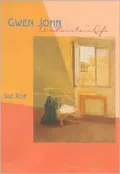
A revealing, animated biography of a sexual and intellectual rebel and a great painterIn 1942, at the height of his fame, Augustus John predicted that 'fifty years from now I shall be known as the brother of Gwen John'. Gwen John (1876-1939) is indeed now recognised as a great artistic innovator, yet for years her life remained shrouded in the myth of the solitary recluse. Born in Pembrokeshire, Gwen followed her brother to the Slade. Her future was bound up with Augustus, his women and his coteries, yet she was also daring and highly original, living determinedly in her own way.
Defiant yet shy, she painted and modelled amid the Bohemian circles of early twentieth-century Paris and embarked on a long, intense love affair with France's most legendary artistic figure, the sculptor Rodin. A friend of Symbolist poets and post-Impressionist painters, later she turned increasingly to religion, achieving a deep serenity which masked her inner turbulence and creating her haunting paintings, described as delicate and austere, restrained and still.
Based on her lively and passionate unpublished letters and lavishly illustrated, this vivid new biography challenges our prejudices about the ways we evaluate women artists and finally uncovers the life of this ardent and complicated personality, one of the finest artists of her day.
Editorials
Publishers Weekly
British novelist, poet and critic Roe (Estella) offers a biography of the painter John (1876-1939), who focused on Whistler-like portraits and spent some time as mistress to the great French sculptor Auguste Rodin. Once undervalued because of the celebrity of her now-neglected painter brother Augustus John (1878-1961), Gwen John is an utterly British subject in her lifelong shyness and reticence, yet offers a welcome alternative for Brit-o-phile readers weary of the Bloomsbury circle (Roe's Writing and Gender: Virginia Woolf's Writing Practice among the plethora of titles). This new book tells more than most readers will want to know about degrees of feeling in John's relationship with Rodin and her emotions when she loses her cat, Quinet. Despite the book's subtitle, there is mostly vague and generalized analysis of the paintings themselves: "...her work gained a strong, fluid sense of immediacy and an intimacy between artist and subject," is a typical assay. The many women Johns painted reveal some interesting psychological states, including bleary depression, sexual repression and clear excitement sometimes all in the same image. But Roe gets too caught up in landlords' bills and the like, and fails to focus clearly on John's highest achievements (shown in 16 pages of b&w and color images). As a modern woman artist, Johns had a life about one-tenth as interesting as that of contemporaries like Mina Loy, but this recognition of her contribution should at least restore her to the era's artistic ferment. (Nov.) Copyright 2001 Cahners Business Information.Library Journal
Gwen John (1876-1939) was born in Wales and schooled at the Slade School during its halcyon days, but she lived in Paris for most of her life. An excellent draughtsman appreciated for her intimate portraits and spaces, she produced work that echoed her character, artistic sensibility, and conversion to Roman Catholicism. Reflective of her personality, her enigmatic paintings coupled with her tortured personal relationships create an artistic legacy resembling that of Frida Kahlo. Novelist and critic Roe's captivating contribution to the scholarship on John relies upon primary sources, primarily letters and documents from the artist's estate, the Mus e Rodin, and the Tate Archives. This full-length biography provides more depth than Mary Taubman's Gwen John: The Artist and Her Work (1986), which consists mostly of color plates, and it far outclasses Susan Chitty's Gwen John, 1876-1939 (1981. o.p.). Chitty focused on biography at the expense of art history, while Roe balances biography with a critical analysis of John's work. She also considers John's own virtues as an artist well beyond her secondary roles as the sister of painter Augustus John, Rodin's model and mistress, and Whistler's student the focus of previous narratives. Roe's blend of insight and eloquent narrative merges into a thoughtful, enduring masterpiece. Highly recommended for all libraries, this work will likely become a much-read classic. Rebecca Tolley-Stokes, East Tennessee State Univ. Lib., Johnson City Copyright 2001 Cahners Business Information.Kirkus Reviews
British novelist and poet Roe (The Spitfire Factory, not reviewed, etc.) pens a well-tempered, bracing biography of the painter too often trivialized as Augustus John's sister or Auguste Rodin's lover. Working from letters in the Musee Rodin, the Tate Archives, the New York Library, and private collections, Roe takes John (1876-1939) out of the shadows into which, it begins to seem, she has been willfully put by others. Far from being the wimpy recluse of art-history tradition, John was an important, respected, and active member of the art community in Paris during a particularly vibrant era. Emotionally, she was vulnerable: her broken affair with Rodin threw her sideways for some time, she tended to confuse "devotional love with emotional yearning," and she displayed a "chronic need for approval of her work." But artistically and socially she was fulfilled: her work was admired by contemporaries (including her brother); neighbors and friends included poet Rainer Maria Rilke, critic Arthur Symons, and Irish nationalist Maud Gonne. Roe builds a supple and rolling narrative from the correspondence, striving for accuracy in presentation and keeping the speculation to a minimum as she tracks John through her years in France and numerous close friendships. The author also does a smart, unadorned job of following John's evolution as a painter, from her animated early works, with their interiorist tones, to the later oblique paintings, with their misshapen subjects. A very recognizable and human picture of John emerges as a searcher for faith and love quite like Roe's description of one of her letters: "portentous, eerie, with a sustained mood of beauty in strangeness." Animpressive portrait of a "busy, daring, and eventful life," profoundly independent and intellectual, though also melancholic.Book Details
Published
November 1, 2001
Publisher
Farrar Straus Giroux
Pages
464
Format
Hardcover
ISBN
9780374113179