
Psychiatry - General & Miscellaneous, Public Health & Preventive Medicine, Physician & Patient, Medical Ethics, Psychiatric Social Work, Pathology, Forensic Psychiatry & Psychology, Ethics & Moral Philosophy - Applied - Bioethics/Medical, Mental Health Se
Available on Bookshop
Write a review
Books.org participates in affiliate programs including Bookshop.org and the Amazon Services LLC Associates Program. We may earn a commission from qualifying purchases made through links on this page, at no additional cost to you.
Log in to track your reading progress.
Overview
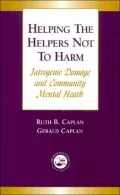
The authors of this controversial volume have collected case studies and observational accounts of caregivers for over 15 years. Iatrogenic harm is a serious and widespread problem that many have been reluctant to speak out about for fear of being blacklisted by their colleagues. In writing this book the authors hope to establish guidelines that will help caregivers to recognize and deal with potentially harmful behavior thereby improving the standards of care for all patients.
Editorials
From The Critics
Reviewer: William Miles, MD(Rush University Medical Center)Description: The authors describe and discuss the iatrogenic damage that mental health intervention can cause in a book that does not limit its focus to physicians, but includes social workers, judges, and other sources of iatrogenic harm.
Purpose: The purpose is to heighten awareness of the potential for iatrogenic harm, especially in the mental health field, and to highlight the fact that physicians are not the only source of iatrogenic damage.
Audience: The book is targeted to all professionals who may inadvertently cause iatrogenic damage to mental health patients. The book clearly has a clinical bias, and therefore is geared more towards physicians and other mental health workers than those, say, in the legal profession.
Features: The authors define iatrogenic harm and discuss the many potential causes. This book focuses on iatrogenic harm in mental health practice, and in particular on children and families. Behaviors and other warning signs/symptoms of iatrogenic harm are offered. Several clinical examples are presented. The book then goes on to address the necessity of recognizing and ultimately preventing iatrogenic harm. The book concludes with some possible solutions to this problem. A bibliography is offered at the end, as is an index. One complaint I have is that the references should have appeared at the end of each chapter and cited throughout the text appropriately.
Assessment: Iatrogenic literally means "healer produced" and, though widely recognized and discussed in other fields of medicine, it is not discussed much in relation to psychiatry. However, the potential for iatrogenic damage is high in psychiatry and this needs to he recognized and discussed. This book is a start, addressing the potential for iatrogenic harm in children and families entering the mental health system. I hope the authors expand their book to include the more than 70 percent of psychiatric patients who are either misdiagnosed or on insufficient medication.
3 Stars from Doody
Book Details
Published
November 29, 2001
Publisher
Routledge
Pages
240
Format
Hardcover
ISBN
9781583910955