
Ontario - History, U.S. Authors - 20th Century - Literary Biography, Ontario - Travel, Canada - Travel Essays & Descriptions, Boating - General & Miscellaneous
Log in to track your reading progress.
Overview
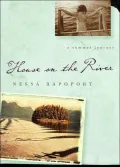
One August, Nessa Rapoport rented a houseboat to travel through the blue lakes and stone canals of the Trent-Severn Waterway in Ontario with her children, mother, and uncle and aunt. At the end of the journey was a small Canadian town called Bobcaygeon, where Rapoport and her mother and uncle had once spent dreamy summers of reading and reverie in an old house on a green river.Although the purpose of the trip was to show her young children the setting of her summers when she was their age, Nessa Rapoport discovered that all three generations of her family were floating toward an encounter with the past.
Beautifully written and evocative, House on the River explores the power of memory to shape a person's life, the deep bonds across generations, the reconciliation of mothers and daughters, and the way loss can be distilled into a source of consolation. It is the story of an enchanting journey on water and an inner journey inflected by a vibrant and joyful relationship to family and faith.
Editorials
Publishers Weekly
Rapoport, who has published essays and stories in the New York Times, the Forward and the Jewish Week, addresses her family history and the power of place in this philosophical, indulgent and moving meditation. She journeys with her family back to the Ontario cottage where she spent her childhood summers, savoring memories of observing the Sabbath ("after the Sabbath clock has shut the one remaining reading light, I tip-toe onto the screened porch and shiver into my bed, waiting fraught moments until my body warms the sheets") and the public library ("If you took out a book you longed to read, you were permitted to return it the following summer, a privilege I found intoxicating"). Rapoport writes beautifully-sometimes preciously-about motherhood, tradition, displacement and the busy hum of modern life juxtaposed with the placid quietude of the Canadian wilderness. She doesn't hesitate to imbue her reflections with a sense of the divine, even when writing about the mundane (e.g., on the slow pace on the lake: "The boat confers on daily life a profound stillness, an unexpected antidote to genetic impatience"). Similar to Joan Anderson's A Year by the Sea, Rapoport's poetic ruminations reverberate with a nostalgic, wistful tone, always evocative and often poignant. Photos. Agent, Henry Dunow. (On sale July 13) Forecast: Author interviews out of New York could garner Rapoport an audience among Jewish women readers, and Harmony plans to market the book at Jewish book fairs. Copyright 2004 Reed Business Information.Kirkus Reviews
Poet/novelist/essayist Rapoport (A Woman's Book of Grieving, 1994, etc.) takes a boat journey into the benediction of the past. There's no time to lose as the author rounds up a company of relatives, some working on their 60s and 70s, to make a pilgrimage by houseboat up the Trent-Severn Waterway back to their summer place in Bobcaygeon, Canada. The house no longer belongs to the family, so this will be a drive-by, and Rapoport will fill it with as many digressions as there are waterpaths in the Thousand Islands. She keeps the story in the moment, marveling at a double rainbow and the stars above a place called Burleigh Falls: "happy, trying to memorize the texture of each minute, convinced I shall not know such a time again, an oasis of untainted plenty," while knowing that, "for me, memory is tangible, always present. My recollections are objects, available to scrutinize, to savor, even to alter." She wants to taste a measure of what she once felt there at her grandmother's place, and so the story is drawn ineluctably back to the dreaminess of those perfumed summer days. While the town has its psycho-geographical intensity, the memoir pivots around the family. Rapoport elegantly delineates the Judaic terrain, a temperate ground that scorned the ideologues and felt sorrow for the lapsed and that took delight in devotion and ritual, in knowledge and wisdom. She gives herself over to the dominion of emotion in the undertaking of this return, "like a wonder of nature to which people flock, their faces rapt, the water endlessly falling, stronger than death." Stirringly, this involves saying good-bye: "Only if you acknowledge parting, embrace it without flinching, can you leave well. If youdeny its imminence, the agony of farewell is never subdued." There are some flinches, though, and they are powerful, compressed to the point at which gemstones are made. A profound slice of "uncut opium, pure memory." Agency: Dunow & CarlsonBook Details
Published
July 1, 2004
Publisher
New York : Harmony Books, c2004.
Pages
159
Format
Hardcover
ISBN
9781400048878