
Writing, Language Arts - English Language, Study Aids - General & Miscellaneous, Literature - Book Production & Publishing
Log in to track your reading progress.
Overview
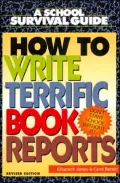
These easy-to-understand handbooks How to Be School Smart, How to Write Terrific Book Reports, How to Do your Best on Tests, and How to Write Super School Reports have offered students clear, commonsense advice on how to successfully organize and carry out school assignments for over a decade. Now these great guides have been completely revised to reflect the needs of today's technology-savvy kids.
Explains how to write an effective book report, covering such aspects as choosing the book, thinking while reading, writing a first draft, and preparing the final draft, and offers tips for oral presentations.
Editorials
San Francisco Ecaminer & Chronicle
One of our four books in a School Survival series, this guide spells out how to make book reports better for those who already like to write them or easier for those who hate them "because they are hard to do and because you don't know what to say. "San Francisco Examiner & Chronicle
One of our four books in a School Survival series, this guide spells out how to make book reprts better for those who already like to write them or easier for those who hate them"because they are hard to do and because you don't know what to say." The authors quickly go over the need for book reports ("you're doing an importatnt job for your classmates"because there are so many books, how to choose a book (if choice is offered and using the library as a resource. When it comes to organizing and writing tips, they suggestanswering three wuestions: What is the book about? What main idea did the author want to tell the reader? Did I like or dislike it, and why? They also offer tips to make the processmore fun, like writing to the author or publisher for more information or even freebies, or writing the report in the style of a newspaper article. Students will appreciate the book'sformat: short sections and a not-too-preachy attitude.Publishers Weekly -
The authors of How to Write a Term Paper now concentrate on that bane of school assignments, the book report, discussing their value and detailing steps for drafting and polishing. Their clear, lively hints breed confidence by making conscious processes that children may be using already and by offering practice questions that can be used for most assignments (e.g., ``How does the book make you feel?'') Topics include choosing books; getting help from teachers and librarians; adding a measure of fun to oral reports with costumes and props. Middle-grade students will especially appreciate the directions for correcting common problems (e.g., paragraphs that are too long). (8-12)Children's Literature -
This is an excellent guide for the beginning writer as well as a reference tool for the older student who is an accomplished writer. Students are often confused about how to begin a report once the reading and research are complete. The authors present a step-by-step process for developing a book report, beginning with suggestions for selecting the book and ending with presenting an oral book report. Instructions tell kids how to get organized, what parts of the book are important, and how to clean up a first draft. Students also receive information about ways to enhance a report, such as contacting the author on-line or using props and costumes for the presentation. Originally published as How To Write Your Best Book Report. 1998 (orig.Children's Literature -
With more and more classroom emphasis being placed on a student's ability to write, homework assignments often involve a writing assignment. This is an excellent guide for the beginning writer as well as a reference tool for the older student who is an accomplished writer. Students are often confused about how to begin a report once the reading and research are complete. The authors present a step-by-step process for developing a book report, beginning with suggestions for selecting the book and ending with presenting an oral book report. Instructions tell kids how to get organized, what parts of the book are important, and how to clean up a first draft. Students also receive information about ways to enhance a report, such as contacting the author on-line or using props and costumes for the presentation. Originally published as How To Write Your Best Book Report. 1998 (orig.School Library Journal
Gr 4-6 The process of writing book reports is of little concern to most students, who care more about their completion. Perhaps this book should be part of the assignment. It is well organized and explains the whys and hows of writing a book report from chosing the book, through the final draft or an oral report. The style is smooth, spare, and lucid. The chapters are divided into short sections and contain examples of reporting on fiction and nonfiction. It should be helpful to students writing their first formal book report and to experienced students wishing to improve skills, as well as to teachers and librarians providing assistance. A worthwhile companion to the authors' How to Write a Great School Report (Lothrop, 1983). Marguerite Lewis, Glenmont Elementary School, N.Y.Book Details
Published
September 1, 1998
Publisher
HarperTrophy
Pages
80
Format
Paperback
ISBN
9780688161408