
Medical
Available on Bookshop
Write a review
Books.org participates in affiliate programs including Bookshop.org and the Amazon Services LLC Associates Program. We may earn a commission from qualifying purchases made through links on this page, at no additional cost to you.
Log in to track your reading progress.
Synopsis
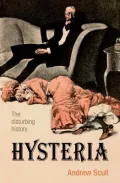
The nineteenth century seems to have been full of hysterical women - or so they were diagnosed. Where are they now? The very disease no longer exists. In this fascinating account, Andrew Scull tells the story of Hysteria - an illness that disappeared not through medical endeavour, but through growing understanding and cultural change. More generally, it raises the question of how diseases are framed, and how conceptions of a disease change through history.The lurid history of hysteria makes fascinating reading. Charcot's clinics showed off flamboyantly 'hysterical' patients taking on sexualized poses, and among the visiting professionals was one Sigmund Freud. Scull discusses the origins of the idea of hysteria, the development of a neurological approach by John Sydenham and others, hysteria as a fashionable condition, and its growth from the 17th century. Some regarded it as a peculiarly English malady, 'the natural concomitant of England'sgreater civilization and refinement'. Women were the majority of patients, and the illness became associated with female biology, resulting in some gruesome 'treatments'. Charcot and Freud were key practitioners defining the nature of the illness. But curiously, the illness seemed to swap gender duringthe First World War when male hysterics frequently suffering from shell shock were also subjected to brutal 'treatments'. Subsequently, the 'disease' declined and eventually disappeared, at least in professional circles, though attenuated elements remain, reclassified for instance as post-traumatic stress disorder.Book Details
Published
January 1, 2012
Publisher
OUP Oxford
Pages
240
Format
Paperback
ISBN
9780199692989