
Children - Social Studies, Children - Biography, Children - Art & Architecture
Available on Bookshop
Write a review
Books.org participates in affiliate programs including Bookshop.org and the Amazon Services LLC Associates Program. We may earn a commission from qualifying purchases made through links on this page, at no additional cost to you.
Log in to track your reading progress.
Editorials
Children's Literature
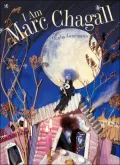
Italian artist Bimba Landmann has created sixteen constructions based on the life of Marc Chagall (1887-1885) as related in his autobiography. This book was surely a labor of love for Landmann, designing, fashioning, and assembling figures, objects, and backgrounds from many materials, such as paper, metal, clay, fabric, plants, and small found objects. Some scenes are framed in rough wood, while others spill out onto the pages. Readers will find reflections of Chagall's own work: lavish use of color and fantasy, a suggestion of cubism, and many motifs from his paintings, including goats, cows, violins, and the wooden houses of his beloved Vitebsk. Some scenes show small reproductions of Chagall paintings, like the Parisian cat and several images of the green violinist, while the text presents important events of the artist's life in the first person, as if he were speaking to the reader. The story ends as Chagall arrives in New York in 1941; this scene is the least effective with its murky colors and heavy stars made from sequined braid. Chagall did write about his own life, and the best way to approach his paintings is, of course, to see the works themselves. Still, this is quite an achievement—a distillation of Chagall's world that may inspire viewers to learn more about his work. Landmann includes a useful and accurate timeline of his life, but no bibliography. Several Web sites present Chagall's paintings (www.mcs.csuhayward.edu/~malek/chagall10.html offers ten representative ones), and students living in larger cities will be able to view some in local museums. 2006, Eerdmans, Ages 7 up.—Barbara L. Talcroft
School Library Journal
Gr 4-6-In this novel, Chagall tells his own story. The painterly, poetic, first-person narrative is based loosely on his autobiography, My Life. It highlights the key influences on his life and art. "My entire family, the whole of Vitebsk, lived inside my paintings." Reflecting his style, the three-dimensional illustrations are constructed from an eclectic assortment of materials-cardboard, fabric, sequins, weeds, and more-and set against vivid colors to create set designs, vignettes of the artist's life. Readers will be fascinated by these unusual pictures and the beautifully told story. However, to fully appreciate this book, they need an acquaintance with Chagall's work and some knowledge of 20th-century world history. Although the narrative is fact based, the line between fact and fiction is unclear. No documentation confirms quotations, thoughts, or feelings. Dated highlights of Chagall's life help to clarify some of this confusion, but children should (and will) enjoy this title as a work of fiction.-Carolyn Janssen, Public Library of Cincinnati and Hamilton County, OH Copyright 2006 Reed Business Information.Kirkus Reviews
Hot on the heels of Michelle Markel's Dreamer from the Village (2005) comes another picture-book biography of the great 20th-century surrealist, this one illustrated with stunningly three-dimensional mixed-media collages. Landmann bases her narrative "loosely" on the artist's autobiography, My Life, allowing her subject to speak directly to the reader: "I painted my world, my life, all the things I loved, all the things I dreamed of, all the things I could not say in words." The technique is relatively successful in conveying the spirit of Chagall's vision, if of dubious nonfiction merit. But the illustrations so overshadow the text that for readers, it will hardly matter. Chagall himself is depicted with a fluff of purple fuzz for hair and posed bits of fabric for a body. A series of shallow dioramas constructed of corrugated cardboard, twigs, wire and fabric present events and translate verbal images in dizzyingly complex tableaux. The palette itself is straight from Chagall, each spread dominated by purples, reds, blues or greens. A timeline provides concrete facts, but the overall effect of the whole inevitably (and perhaps appropriately) emphasizes image over mere biography. (Picture book/biography. 7-12)Book Details
Published
January 1, 2005
Publisher
Eerdmans Pub Co
Pages
40
Format
Hardcover
ISBN
9780802853059