
French Literary Biography, Letters, General & Miscellaneous Literary Criticism, Gay & Lesbian Studies, Gay & Lesbian Biographies
Log in to track your reading progress.
Overview
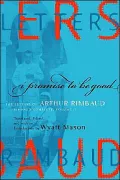
One of the most written-about literary figures in the past decade, Arthur Rimbaud left few traces when he abandoned poetry at age twenty-one and disappeared into the African desert. Although the dozen biographies devoted to Rimbaud's life depend on one main source for information—his own correspondence—a complete edition of these remarkable letters has never been published in English. Until now.A moving document of decline, Rimbaud's letters begin with the enthusiastic artistic pronouncements of a fifteen-year-old genius, and end with the bitter what-ifs of a man whose life has slipped disastrously away. But whether soapboxing on the essence of art, or struggling under the yoke of self-imposed exile in the desert of his later years, Rimbaud was incapable of writing an uninteresting sentence. As translator and editor Wyatt Mason makes clear in his engaging Introduction, the letters reveal a Rimbaud very different from our expectations. Rimbaud—presented by many biographers as a bohemian wild man—is unveiled as "diligent in his pursuit of his goals . . . wildly, soberly ambitious, in poetry, in everything."
I Promise to Be Good: The Letters of Arthur Rimbaud is the second and final volume in Mason's authoritative presentation of Rimbaud's writings. Called by Edward Hirsch "the definitive translation for our time," Mason's first volume, Rimbaud Complete (Modern Library, 2002), brought Rimbaud's poetry and prose into vivid focus. In I Promise to Be Good, Mason adds the missing epistolary pieces to our picture of Rimbaud. "These letters," he writes, "are proofs in all their variety—of impudence and precocity, of tendernessand rage—for the existence of Arthur Rimbaud." I Promise to Be Good allows English-language readers to see with new eyes one of the most extraordinary poets in history.
Editorials
Publishers Weekly
The story, of course, is the stuff of legend: after a painful affair with the older, married poet Paul Verlaine, Rimbaud (1854-1891) put poetry behind him at age 21 and became a commercial traveler in Africa and Arabia, returning home to Charlevoix and his family only at the end of his brief life and dying painfully of gangrene complications. Mason, the American translator who last year published Rimbaud's collected poems in English, gives us a Rimbaud that's a far cry from the Dionysian figure who inspired Jim Morrison, Patti Smith and David Wojnarowicz with his call for a slow derangement of the senses. In the 27 letters included here that were written before Rimbaud's departure (the first, from 1870, left in a teacher's mailbox), Mason unveils instead an Apollonian craftsman, one who took infinite pains to achieve perfection of expression and who comes clear in the letters "not with rubbery biographical inventions or facile psychological putty" but as a "clear, deliberate personality." Rimbaud quits France after seeing Verlaine for the last time in 1875 for five years of poorly documented sojourns in Europe and the U.K., for which there are only five letters. From there, the interest level of the 149 epistles that follow plunges way down. Mason's an agile, skillful translator, and he does his best to enliven the long litany of profit and loss in Rimbaud's African commercial adventures, but when he tells us he has excluded 34 letters to Alfred Ilg, a trading colleague of Rimbaud's, on the ground that they're too boring, anyone who has read through this whole volume will not feel it a loss. (Nov.) Copyright 2003 Reed Business Information.Library Journal
In this second volume of Modern Library's "Rimbaud Complete," Mason, who translated and edited Rimbaud's poetry for the first volume, provides a portrait of the poet in his declining years. Mason wants to correct the pervasive biographical picture of Rimbaud as poetry's bad boy, debauched by drugs, alcohol, and sex. The 250 letters collected here-all written between 1870 and Rimbaud's death in 1891-offer a more sober picture of the poet. For example, he begs Verlaine to "come back, come back, dear friend, only friend" and tenderly reports on his journeys around Europe, Africa, and Egypt to his family: "I haven't forgotten you at all, how could I? And if my letters are too short, it's that, as I'm now always going on expeditions, I'm always in a rush when the mail is about to leave. But I think of you, and think of little but you." His famous 1871 letter to Paul Demeny contains his oft-quoted theory of poetry: "The Poet makes himself into a seer by a long, involved and logical derangement of all the senses." Although Rimbaud's letters are not as well documented as those by most poets, these letters reveal glimpses of his loves, his hates, his tenderness, his poetics, and his stubborn will to create. Mason's elegant translations flow smoothly off the page, and libraries that own Mason's volume of Rimbaud's poems will certainly want to add this to their collections.-Henry L. Carrigan Jr., Lancaster, PA Copyright 2003 Reed Business Information.Book Details
Published
November 1, 2003
Publisher
New York : Modern Library, 2003.
Pages
400
Format
Hardcover
ISBN
9780679643012