
Armed Forces - United States - General & Miscellaneous, Confederate States of America - Armed Forces, Prisoners of War, 19th Century American History - General and Miscellaneous, United States Civil War - General & Miscellaneous
Log in to track your reading progress.
Overview
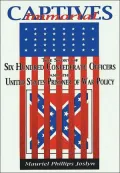
Immortal Captives is two books in one. Mauriel Joslyn has used the story of 600 Confederate prisoners of war to provide insight into the larger questions about prisoner of war issues in the Civil War. Combining original scholarship with full quotations from the participants in the events she describes, she has created both a memorial to the captured officers who came to be held at Fort Pulaski, Georgia and a good history. The policies of President Abraham Lincoln, Lieutenant General Ulysses S. Grant, in addition to those of lower ranking Union leaders come under reevaluation in this story. The Union deliberately chose 600 Confederate officers from fourteen Southern states for its policy of retaliation. Against humanity, those officers were forced to face the artillery fire of their comrades when they were placed in a stockade in Charleston Harbor from August to October of 1864. Their ordeal continued when they were moved to Fort Pulaski for the winter. The last of them were not released until July 1865, months after the war ended.Editorials
Library Journal
Using diaries and official correspondence, Joslyn, a librarian, teacher, and Civil War reenactor who has studied the period for over 20 years, relates the courageous story of the 600 Confederate prisoners of war singled out for "retaliatory" treatment similar to that suffered by Union prisoners in Confederate prisons. Reacting to horror stories of Andersonville, the North began to treat Confederate prisoners as it believed Union prisoners were being treated. It finally ceased all prisoner exchanges to deny the South valuable fighting men. The "immortal 600" bore the brunt of "retaliatory" cruelty, often surviving on only a few wormy crackers and pickles as a daily ration. Joslyn painstakingly portrays the deprivation and psychological torture the Confederates suffered as they were shuffled among prisons at Morris Island, Fort Pulaski, and Fort Delaware. Time and again, they were told they would be exchanged only to face bitter disappointment caused by bureaucratic bungling and bad luck. Only the war's end brought freedom to those of the 600 who hadn't succumbed to dysentery, scurvy, or a host of other maladies. The author paints a detailed portrait of prison life during the Civil War. Recommended for academic and large public libraries.-Grant A. Fredericksen, Illinois Prairie Dist. P.L., MetamoraBook Details
Published
June 16, 1996
Publisher
Shippensburg, PA : White Mane Pub. Co., c1996.
Pages
360
Format
Hardcover
ISBN
9780942597967