
Short Story Collections (Single Author), Other Fantasy Fiction Categories, Space Exploration - Fiction, Thrillers, High Tech and Hard Science Fiction, Other Science Fiction Categories, Literary Styles & Movements - Fiction
Log in to track your reading progress.
Overview
Article purportedly by Jules Verne, but probably by his son. According to the editor's note at the beginning: "In the Year 2889_ was first published in the _Forum_, February, 1889; p. 262. It was published in France the next year. Although published under the name of Jules Verne, it is now believed to be chiefly if not entirely the work of Jules' son, Michel Verne. In any event, many of the topics in the article echo Verne's ideas."Synopsis
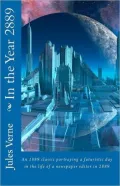
"In the Year 2889," which was first published in 1889, portrays a futuristic day in the life of a 20th century newspaper editor. Much of the story sounds like an episode of "The Jetsons." For example, a man is clothed by a mechanical dresser before being whisked off to work. The story, which is set in New York City (now called Centropolis), delves into what the future world might look like, including technological advancements, international relations, and social mores. First published n 1889 under the name of Jules Verne, "In the Year 2889" may be chiefly the work of Jules Verne's son, Michel Verne. Michel, who was in charge of publishing his father's work late in Jules Verne's life, may have had financial motivation to utilize his Jules Verne's well-known pen name. Regardless of actual authorship, many of the topics covered in "In the Year 2889" echo the ideas of Jules Verne, and the tenor of the book is generally in keeping with Jules Verne's optimistic view of future possibilities. Jules Verne (1828-1905) was a French author who helped pioneer the science-fiction genre. He is best known for his novels A Journey to the Centre of the Earth (1864), From the Earth to the Moon (1865), Twenty Thousand Leagues Under the Sea (1869-1870), Around the World in Eighty Days (1873) and The Mysterious Island (1875). Verne wrote about space, air, and underwater travel before navigable aircraft and practical submarines were invented, and before any means of space travel had been devised. Consequently he is often referred to as the "Father of science fiction", along with H. G. Wells. Verne is the second most translated author of all time, only behind Agatha Christie, with 4223 translations, according to Index Translationum. Some of his works have been made into films.Book Details
Published
March 28, 2010
Publisher
CreateSpace
Pages
34
Format
Paperback
ISBN
9781451577914