
Social & Cultural Aspects of Technology, Social Sciences - General & Miscellaneous, Social Structure & Social Change, Personal Growth, Social & Cultural Aspects of Technology
Available on Bookshop
Write a review
Books.org participates in affiliate programs including Bookshop.org and the Amazon Services LLC Associates Program. We may earn a commission from qualifying purchases made through links on this page, at no additional cost to you.
Log in to track your reading progress.
Overview
"The most persuasive forecast of the 21st century I have seen." -- E.O. Wilson, author of Consilience: The Unity of Knowledge and twice winner of a Pulitzer prize“Human beings have been smart enough to turn nature to their ends, generate vast wealth for themselves, and double their average life span. But are they smart enough to solve the problems of the 21st century?” -- Thomas Homer-Dixon
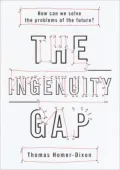
Can we create ideas fast enough to solve the very problems -- environmental, social, and technological -- we’ve created? Homer-Dixon pinpoints the “ingenuity gap” as the critical problem we face today, and tackles it in a riveting, groundbreaking examination of a world that is rapidly exceeding our intellectual grasp.
In The Ingenuity Gap, Thomas Homer-Dixon, "global guru" (the Toronto Star), "genuine academic celebrity" (Saturday Night) and "one of Canada's most talked about and controversial scholars" (Maclean's) asks: is our world becoming too complex, too fast-paced to manage? The challenges facing us -- ranging from international financial crises and global climate change to pandemics of tuberculosis and AIDS- converge, intertwine, and remain largely beyond our ken. Most of suspect the "experts don't really know what's going on; that as a species we've released forces that are neither managed nor manageable. We are fast approaching a time when we may no longer be able to control a world that increasingly exceeds our grasp. This is "the ingenuity gap" -- the term coined by Thomas Homer-Dixon, political scientist and advisor to the White House -- the critical gap between our need for practical, innovative ideas to solve complex problems and our actual supply of those ideas.
Through gripping narrative stories and incidents that exemplify his arguments, he takes us on a world tour that begins with a heartstopping description of the tragic crash of United Airlines Flight 232 from Denver to Chicago and includes Las Vegas in its desert, a wilderness beach in British Columbia, and his solitary search for a little girl in Patna, India. He shows how, in our complex world, while poor countries are particularly vulnerable to ingenuity gaps, our own rich countries are not immune, and we are caught dangerously between a soaring requirement for ingenuity and an increasingly uncertain supply. When the gap widens, political disintegration and violent upheaval can result, reaching into our own economies and daily lives in subtle ways. In compelling, lucid, prose, he makes real the problems we face and suggests how we might overcome them -- in our own lives, our thing, our business and our societies.
From the Trade Paperback edition.
Synopsis
As crises multiply, ingenuity lags. This prescient classic explains why societies falter when problems outpace solutions—and offers a roadmap to close the gap before risks from climate shocks, pandemics, inequality, and AI spiral beyond control. First published at the turn of the millennium, The Ingenuity Gap by Thomas Homer-Dixon anticipated the turbulent world we now inhabit: pandemics, climate disasters, political polarization, disruptive runaway technologies, and escalating global instability. With remarkable foresight, Homer-Dixon warned that the complexity of our problems would accelerate faster than our collective ingenuity to solve them—and that failure to close this “gap” would leave societies fragile and exposed. A quarter century later, his vision has proven prophetic. Homer-Dixon takes readers on a global tour of ingenuity under pressure: from the desperate improvisation of pilots fighting to land United Airlines Flight 232 in Iowa, to the water-hungry expansion of Las Vegas, to a harrowing search for a missing child in Patna, and the collapse of Canada’s cod fisheries. Vivid and far-reaching, it is a sweeping portrait of what happens when societies are stretched beyond their capacity to adapt and an enlightening case for why ingenuity is humanity’s most vital resource. Celebrating over twenty-five years in print, The Ingenuity Gap remains both a visionary diagnosis of our age and a call to reimagine how we generate creativity, resilience, and leadership in uncertain times.Editorials
Publishers Weekly -
In a virtual tour of the state of ingenuity today, Homer-Dixon reminds us that "the greater complexity, unpredictability and pace of our world, and our rising demands on the human-made and natural systems around us" make it more critical than ever that smart solutions to technical and social problems be ready at a moment's notice. If economists like Harold Barnett and Chandler Morse rely on market forces to keep the supply of ingenuity in line with demand, Homer-Dixon, a professor of political science at the University of Toronto, regards such an attitude as dangerously optimistic. Recounting the details and timing of crises like the October 1987 stock market crash and the July 1989 crash of United Flight 232 in which 111 passengers died but 185 miraculously survived, he argues that only a unique confluence of people and experience lets the supply of ingenuity equal the demand to avert total disaster in each case. Given persistent imperfections in markets, breakdowns in feedback loops and the weakening of social structures that have traditionally facilitated ingenuity, he is dubious that such extraordinary conditions can be met time and again. To scare us into action, he provides hair-raising examples of the effects of collapsing systems in Third World countries he has visited and studied. Marshaling a vast amount of information from such disparate fields as economics, ecology and biology, Homer-Dixon makes his most compelling case arguing for increased efforts to nurture social as well as technical ingenuity. (Oct.) Copyright 2000 Cahners Business Information.|Library Journal
In search of an understanding of how humankind is responding to increasingly complex social, technological, and environmental problems--from AIDS to global warming--Homer-Dixon (political science, Univ. of Toronto; director, Peace and Conflict Program) visited a wide variety of cultural and political settings. He supplements his observations and research with interviews with engineers, ecologists, physical, social, and political scientists, among others. In each venue, Homer-Dixon assesses the balance between the need for problem-solving ingenuity and its availability. He raises the question of whether the speed and direction of changes is creating situations beyond our intelligence and imagination to control, even if we can agree on the goals, the path, and the beneficiaries of corrective solutions. But while he is cautiously optimistic that we can reverse present trends, he emphasizes that we must first change our values and self-perceptions and thereby "achieve a (more) measured awareness of our place in the universe." Clearly presented, this thoughtful and thought-provoking work is highly recommended for academics and the general public.--Suzanne W. Wood, SUNY Coll. of Technology at Alfred Copyright 2000 Cahners Business Information.Booknews
The gap Homer-Dixon (peace and conflict studies, U. of Toronto) sees is not between countries, but between the need for practical, innovative ideas to solve complex problems in such areas as international finance, global climate, and health, and the actual supply of those ideas. After walking through a number of examples, starting with a United Airlines crash, he warns of political disintegration and violent upheaval, and suggests how to overcome the problems. Annotation c. Book News, Inc., Portland, OR (booknews.com)Kirkus Reviews
A farreaching examination of our institutions and issues, from the economy to government to ecology, and the challenge of overcoming problems as fast as we can create them.Book Details
Published
May 15, 2001
Publisher
Knopf Doubleday Publishing Group
Pages
496
ISBN
9780375412714