Publishers Weekly
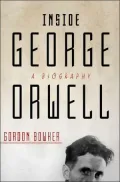
Bowker's centenary biography is the best of the many since Orwell's death at 46, of tuberculosis, in 1950. Whether in memorable essays on contemporary culture or in novels in which the bleak Orwellian landscape remains consistently familiar, George Orwell-born Eric Blair-was a moral conscience of his age. He seemed to forget nothing of his experiences, exploiting them vividly and imaginatively, and the texture of his childhood, adolescence and young manhood, as well as their impact upon his writing, has never been better or more fully told. An Etonian who slipped social caste to become a policeman in colonial Burma; a tramp in London and a dishwasher in Paris; a radical, soon-wounded volunteer in the Spanish Civil War-he never made a living until, as a medical misfit during WWII, he wrote for the BBC: his education in bureaucracy. But he needed none of that, he explained, to understand the fragility of human decency. "The brutal side of public-school life, which intellectuals always deprecate," he explained, "is not a bad training for the real world." Bowker, biographer of Malcolm Lowry and Lawrence Durrell, has a retentive eye for striking Orwellisms, and one can have no more effective model for lucid prose than the writer of "Politics and the English Language." Orwell's life also never lacked drama. Rarely a deskbound author, he always pushed himself beyond his limits. Dying by degrees, he ignored the symptoms of tuberculosis recklessly, even scratching out a living on a desolate island in the Hebrides that had nearly no amenities. Finally, he wed his long-lusted-for second wife at his hospital deathbed, having promised her a wealthy and famous widowhood. In all his complex contradictions, Orwell comes to energetic life. Illus. (For another life of the author of 1984, see Orwell by D.J. Taylor, reviewed on p. 269.) (Oct. 30) Copyright 2003 Reed Business Information.
Library Journal
This centenary year of George Orwell's birth has produced two major British biographies following lives by Bernard Crick (1980), Michael Shelden (1991), and Jeffrey Meyers (2000). Bowker (Pursued by Furies) covers the now-familiar terrain of Orwell's short life in fascinating-and sometimes controversial-detail. What emerges is the "human face of Orwell," as Bowker explores Orwell's complicated sexuality and womanizing, his persistent practice of deception, and his strong prejudices. He also assesses the impact that chronic illness had on Orwell's life and writings. As for new revelations, Bowker claims several: the influence of Orwell's early Catholic education, his obsession with black magic, his illicit liaisons in Burma, and a long-running affair with an early girlfriend. Finally, Bowker expands on new evidence about the Soviet pursuit of Orwell during the Spanish Civil War and Orwell's subsequent collaboration with the British Foreign Office in World War II (when he allegedly "named names" of Communist sympathizers). In Orwell, Taylor (Thackeray) fills in some gaps of his own-chiefly through the unpublished writings of Orwell's friends and contemporaries. Starting with a moving description of Orwell's funeral in 1950, Taylor vividly presents the years in India, the "down and out" adventures, fighting in Spain, Orwell's work with the BBC during the war, and his final great novels. Taylor breaks the chronological flow with nine brief, interpretive essays (e.g., on Orwell's face, voice, and paranoia). While light on literary analysis of Orwell's writings, Taylor's book is a fresh and compelling life of the man he calls "a light glinting in the darkness." Bowker and, to a lesser extent, Taylor each make understanding the life of this "secular priest" a lot easier. Both biographies are highly recommended for public and academic libraries.-Thomas A. Karel, Franklin & Marshall Coll. Lib., Lancaster, PA Copyright 2003 Reed Business Information.