
Interdisciplinary Aspects of Environmental Sciences, General & Miscellaneous Engineering, Natural Literature & History, Environmental Engineering - General & Miscellaneous, Ethics & Moral Philosophy - Applied - Environmental
Log in to track your reading progress.
Overview
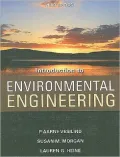
INTRODUCTION TO ENVIRONMENTAL ENGINEERING takes a fresh approach to the study of environmental science and engineering. By using concepts of materials balances, and reactions and reactors, Vesilind integrates and unifies his presentation of water supply, wastewater treatment, air pollution control, and solid and hazardous waste management. Vesilind also incorporates issues of ethics and ethical decision-making throughout the text discussion and accompanying problems - challenging the reader to consider the ethical ramifications of problem solutions. The concept of materials balances unifies coverage of all types of environmental problems, including ecosystem dynamics, wastewater treatment, and air pollution control. The far-reaching nature of ethical issues, as revealed in the book's problems and case studies, illuminates Vesilind's discussions of essential concepts.Synopsis
This text presents a balanced treatment of environmental engineering by combining engineering concepts with the importance of environmental ethics. This third edition highlights sustainable development and emphasizes the need for engineers to become even more environmentally responsible during this time of increasing awareness of environmental concerns. The authors challenge students with problems that require not only a technical solution but a thorough consideration of its ethical ramifications. The text also provides comprehensive exposure to all types of environmental problems, including ecosystem dynamics, wastewater treatment, and air pollution control.
Book Details
Published
May 1, 2009
Publisher
CL Engineering
Pages
603
Format
Hardcover
ISBN
9780495295839