
Literary Criticism - General & Miscellaneous, Literary Theory - General & Miscellaneous, American Literature - Regional Literature - Literary Criticism
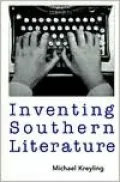
Available on Bookshop
Write a review
Books.org participates in affiliate programs including Bookshop.org and the Amazon Services LLC Associates Program. We may earn a commission from qualifying purchases made through links on this page, at no additional cost to you.
Log in to track your reading progress.
Overview
In Inventing Southern Literature Michael Kreyling casts a penetrating ray upon the traditional canon of southern literature and questions the modes by which it was created. He finds that it was, indeed, an invention rather than a creation. From their heyday to the present, Kreyling investigates the historical conditions under which literary and cultural critics have invented "the South" and how they have chosen its representations. Through his study of these choices, Kreyling argues that interested groups have shaped meanings that preserve "a South" as "the South."Synopsis
I take...an outward route, arguing that the Agrarian project was and must be seen as a willed campaign on the part of one elite to establish and control 'the South' in a period of intense cultural maneuvering. The principal organizers of I'll Take My Stand knew full well there were other 'Souths' than the one they touted; they deliberately presented a fabricated South as the one and only real thing."" In Inventing Southern Literature Michael Kreyling casts a penetrating ray upon the traditional canon of southern literature and questions the modes by which it was created. He finds that it was, indeed, an invention rather than a creation. In the 1930s the foundations were laid by the Fugitive-Agrarian group, a band of poet-critics that wished not only to design but also to control the southern cultural entity in a conservative political context. From their heyday to the present, Kreyling investigates the historical conditions under which literary and cultural critics have invented ""the South"" and how they have chosen its representations. Through his study of these choices, Kreyling argues that interested groups have shaped meanings that preserve ""a South"" as ""the South."" As the Fugitive-Agrarians molded the region according to their definition in I'll Take My Stand, they professed to have developed a critical method that disavowed any cultural or political intent or content, a claim that Kreyling disproves. He shows that their torch was taken by Richard Weaver on the Right and Louis D. Rubin, Jr., on the Center-Left and that both critics tried to preserve the Fugitive-Agrarian credo despite the severe stresses imposed during the era of desegregation. As the southern literary paradigm has been attacked and defended, certain issues have remained in the forefront. Kreyling takes on three: reconciling the imperatives of race with the traditional definitions of the South; testing the ways white women writers of the South have negotiated space within or outside the paradigm; and analyzing the critics' use and abuse of William Faulkner (the major figure of southern literature) as they have relied on his achievement to anchor the total project called Southern Literature.Michael Kreyling, a professor of English at Vanderbilt University, is the author of several books, including Eudora Welty's Achievement of Order and Author and Agent: Eudora Welty and Diarmuid Russell.
Book Details
Published
March 1, 1998
Publisher
University Press of Mississippi
Pages
232
Format
Paperback
ISBN
9781578060450