
Other Islamic Movements & Sects, Ethnic Identity - United States, African Americans - Politics and Government - History, 20th Century American History - Civil Rights, African Americans - General & Miscellaneous, General & Miscellaneous African American Hi
Log in to track your reading progress.
Overview
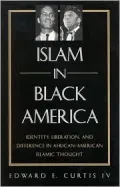
Many of the most prominent figures in African-American Islam have been dismissed as Muslim heretics and cultists. Focusing on the works of five of these notable figures-Edward W. Blyden, Noble Drew Ali, Elijah Muhammad, Malcolm X, and Wallace D. Muhammad-author Edward E. Curtis IV examines the origin and development of modern African-American Islamic thought. Curtis notes that intellectual tensions in African-American Islam parallel those of Islam throughout its history-most notably, whether Islam is a religion for a particular group of people or whether it is a religion for all people. In the African-American context, such tensions reflect the struggle for black liberation and the continuing reconstruction of black identity. Ultimately, Curtis argues, the interplay of particular and universal interpretations of the faith can allow African-American Islam a vision that embraces both a specific group of people and all people.Author Biography: Edward E. Curtis IV is Assistant Professor of Religion at Trinity University.
Editorials
Booknews
Although focused on the thought of Edward D. Blyden, Noble Drew Ali, Elijah Muhammad, Malcolm X, and Wallace D. Muhammad, Curtis (religion, Trinity U.) is more broadly concerned with a common tension in religion: the tension between the idea that a religious tradition is universally applicable to all mankind and the idea that it is applicable to one particular group of human beings. Annotation c. Book News, Inc., Portland, OR (booknews.com)Book Details
Published
May 1, 2002
Publisher
Albany : State University of New York Press, c2002.
Pages
192
Format
Hardcover
ISBN
9780791453698