
Other Americans of European Descent - Biography, U.S. Authors - 20th Century - Literary Biography, American Jews - Biography, World War II Narratives
Log in to track your reading progress.
Overview
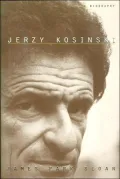
He was hailed as one of the world's great writers and intellectuals, with novels like The Painted Bird and Being There. He was acclaimed as a heroic survivor and witness of the Holocaust. He won high literary awards, made the bestseller lists, taught and lectured in prestigious universities, was feted in high society, and became an intimate of the rich and famous in a jet set world of glitter and glamour. Then, in an expose that sent shock waves throughout the intellectual community, he was denounced as a C.I.A. tool, a supreme con man, and a literary fraud, igniting a firestorm of controversy that consumed his reputation and culminated in his headline-making suicide. Now this compelling biography cuts to the complex heart of the truth about the man and the myth that was Jerzy Kosinski. In so doing, it unfolds a story of reality and deception as fascinating, as moving, as painfully honest, and as revelatory as the most gripping of novels. With research that extends from the Poland of Kosinski's birth and early life to scrupulous examinations of every allegation against Kosinski throughout his career, James Park Sloan, who knew Kosinski for twenty years before his death, leaves no stone unturned and no mask intact. The facts of Kosinski's horrific childhood Holocaust experiences are sorted out from the fictions of The Painted Bird. Sloan traces Kosinski's years as an emigre student at Columbia; his marriage to an alcoholic American millionairess; his first literary mark with anti-Communist writings; his award-winning novels and the controversy surrounding their authorship; his triumphant climb to success on an increasingly shaky stairway of half-truths; his compulsive sexual adventuring in New York's erotic underground; his relationship with such figures as Norman Mailer, Roman Polanski, Henry Kissinger, and others in the political and cultural limelight; and the Gotterdammerung of his life and reputation when an article in the Village Voice cast all he had doneAlthough Jerzy Kosinski mined his past for his writing, he created elaborate barriers around his life, separating the mass-culture celebrity from the troubled and brilliant inner man. In an intriguing and fascinating biography, Sloan, who knew Kosinski during the last 20 years of his life, reconciles the public persona with the private individual. 16 pp. of photos. 528 pp. National print ads. 12,000 print.
Editorials
Publishers Weekly -
When, from time to time, this lively bio fails to read as literary and critical detective work at its best, it entertains la a People magazine profile. Sloan treats Kosinski, whom he describes as having a "penchant for telling more than the truth," as a great man, a charming rogue and an impostor all rolled into one. The question is, what percentages of those qualities combined to make up the complete man? Born Jerzy Lewinkopf in Poland in 1933, he came to the U.S. on a student visa in the 1950s, published two anticommunist tracts pseudonymously, married a wealthy, alcoholic widow and became a celebrated novelist with The Painted Bird, which its editor bought thinking that it was nonfiction. Most of his novels were assumed, with Kosinski's encouragement, to be autobiographical. Over the years there were also rumors-culminating in a damning Village Voice article in 1982-that they may well have been, in part, ghost-written, even plagiarized. Sloan weighs these charges, finding them more accurate than not, and also chronicles stories of CIA involvement in Kosinski's early career, his adventures in both New York's high society and its S-M underworld, his impressive tenure as president of PEN and the events leading up to his suicide in 1991. Sloan concludes that Kosinski was a brilliant, troubled con man who nonetheless legitimately won his place in literature with his Painted Bird. Photos not seen by PW. (Mar.)Library Journal
Fewer than five years after Kosinski's suicide, Sloan's compelling and definitive biography justifies its subject and resolves the paradoxes of a haunted, self-promoting, but powerful storyteller (The Painted Bird, Steps, and others). Sloan (English, Univ. of Illinois) has done a monumental job of research, including interviewing Kosinski's friends and family, to fill in the doomed psychological itinerary of a man who was schooled by his experiences of the Holocaust to hide and dissemble. Kosinski scripted his pseudo-autobiographies, living on the edge of danger and lying about his use of private editors and translators just as he did about his childhood in an intact family. Though circumcised at birth, Kosinski affected an anti-Semitism that hardened onto him like a mask. He was Kosinski the Communist youth, the libertarian exchange student, the budding sociologist, and finally the playboy raconteur of a fictive survivor childhood, who then took the invitation to write it as an autobiography cum novel. Kosinski never had a stable self, but his sadomasochistic novels reflect that real psychology and grew into increasingly legitimate pieces of artistry. Sloan's own style shows why he was once a National Book Award finalist (for Case History of Comrade V. o.p.). For all collections.-Alan Cooper, York Coll., CUNYDonna Seaman
Few writers have raised as many questions about the veracity of their work or the facts of their lives as Kosinski, an enigmatic Pole who electrified the American reading public with his shocking novel of the Holocaust, "The Painted Bird" (1965). Charming, secretive, and ambitious, Kosinski insinuated himself within the ranks of the rich and famous, and, with the publication of "Being There" (1971), became a pop celebrity. But in spite of all the exposure, he remained a shadowy and troubling figure. Nothing made sense, from his accounts of his past to his inability to write a readable letter in English. It all came to a head in 1982 when the "Village Voice" accused him of plagiarism. Nine ears later, Kosinski committed suicide. Sloan, an insightful and eloquent biographer, fills in the blanks of Kosinski's purposefully obscured life, and, with deep sensitivity, decodes his convoluted personality. He traces Kosinski's penchant for subterfuge to his traumatic Holocaust experiences when he had to lie to live, and further, theorizes that this habit became eroticized, leading to Kosinski's notorious sexual excess. Sloan concludes that Kosinski was a master storyteller, unable to write well in his adopted language, who valued fame and power over artistic integrity.Book Details
Published
June 16, 1996
Publisher
New York : Dutton, c1996.
Pages
505
Format
Hardcover
ISBN
9780525937845