
Eschatology, Personality & Identity Psychology, General & Miscellaneous British Philosophy, Modern Philosophy - 17th & 18th Century
Available on Bookshop
Write a review
Books.org participates in affiliate programs including Bookshop.org and the Amazon Services LLC Associates Program. We may earn a commission from qualifying purchases made through links on this page, at no additional cost to you.
Log in to track your reading progress.
Overview
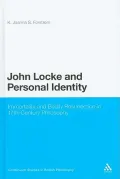
One of the most influential debates in John Locke's work is the problem of personal identity over time. This problem is that of how a person at one time is the same person later in time, and so can be held responsible for past actions. The time of most concern for Locke is that of the general resurrection promised in the New Testament. Given the turbulence of the Reformation and the formation of new approaches to the Bible, many philosophers and scientists paid careful attention to emerging orthodoxies or heterodoxies about death. Here K. Joanna S. Forstrom examines the interrelated positions of Rene Descartes, Thomas Hobbes, Henry More and Robert Boyle in their individual contexts and in Locke's treatment of them. She argues that, in this way, we can better understand Locke and his position on personal identity and immortality. Once his unique take is understood and grounded in his own theological convictions (or lack thereof), we can better evaluate Locke and defend him against classic objections to his thought.
Book Details
Published
May 1, 2010
Publisher
Continuum International Publishing Group
Pages
162
Format
Hardcover
ISBN
9781847061454