
English Fiction & Prose Literature - General & Miscellaneous - Literary Criticism, Literary Criticism - General & Miscellaneous, English Fiction & Prose Literature - 20th Century - Literary Criticism, English Fiction & Prose Literature - 19th Century - Li
Log in to track your reading progress.
Overview
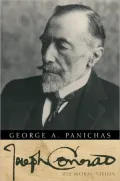
"This book seeks to renew interest in Joseph Conrad's moral imagination - not literary theory but the dignity of creative literature impels the author's reflections on Conrad's novels in their "varied shades of moral significance." Here, the author approaches Conrad's novels in the context of what the novelist V. S. Naipaul writes: "In fiction he did not seek to discover; he sought to explain; the discovery of every tale is a moral one." With illuminating interpretations, the author focuses on the consequences of moral darkness and moral warfare as he proceeds to uncover Conrad's basic ideas and meaning. The book shows that morality in Conrad's work is not reducible to an absolute category but must be apprehended in the forms of both moral crises and the possibility of moral recovery enacted in their complexity and tensions." Guiding a reader's travels to the furthest realms of Conrad's imagination so as to penetrate to the heart of the novelist's moral vision is one of the author's dominant aims. Anyone disturbed by post-modernist advocates of a New World Order has much to ponder in this challenging book.Synopsis
Panichas, a scholar of English and comparative literature, explores the extremities of British novelist Conrad's (1857-1924) vision, delving into its depth of meaning and its subtleties of text and context. Conrad's paramount concern was human fate in the modern age, he argues, and this concern shaped his perception of the meaning of things, and of the lives of men and women struggling with the living universe. Annotation ©2005 Book News, Inc., Portland, OR
Book Details
Published
May 1, 2007
Publisher
Mercer University Press
Pages
192
Format
Paperback
ISBN
9780881460636