
Journalism, Terrorism, United States History - 21st Century
Log in to track your reading progress.
Overview
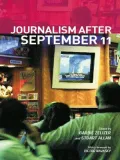
The events of September 11 continue to resonate in powerful, yet sometimes unexpected ways. For many journalists, the crisis has decisively recast their sense of the world around them. The familiar notions of what it means to be a journalist, how best to practice journalism, and what the public can reasonably expect of journalists in the name of democracy, have been shaken to their foundations.Journalism After September 11examines how the traumatic attacks of that day continue to transform the nature of journalism, particularly in the United States and Britain. It brings together an internationally respected group of scholars and media commentators to explore journalism's present and future by engaging with such pressing issues as trauma, free speech, censorship, patriotism, impartiality and celebrity.
Journalism After September 11 raises vitally important questions regarding what journalism can and should look like today. In providing answers, it addresses topics such as: journalism and public life at a time of crisis; the role of sources in shaping the news; reporting by global news media, such as CNN; current affairs broadcasting; news photography and trauma; the emotional well-being of reporters; as well as a host of pertinent issues around news, democracy and citizenship.
Synopsis
The events of September 11 continue to resonate in powerful, yet sometimes unexpected ways. For many journalists, the crisis has decisively recast their sense of the world around them. Familiar notions of what it means to be a journalist, how best to practice journalism, and what the public can reasonably expect of journalists in the name of democracy, have been shaken to their foundations. Journalism After September 11 examines how the traumatic attacks of that day continue to transform the nature of journalism, particularly in the United States and Britain.
Editorials
Jon Snow
The best critique yet of how the media responded to September 11 2001. An eclectic group of seasoned media operatives offer real insight into the challenges, compromises, successes and failures of the coverage that flowed from the attack on the Twin Towers in New York.Phillip Knightley
This is not a book just for journalists but for everyone concerned about democracy, freedom of speech and our future. Distinguished contributors from all over the English-speaking world tackle the crucial question: what did the media's reaction to 11 September tell us about modern media itself? All the ideological assumptions—voluntary censorship, market logic, journalistic patriotism, big corporation dominance—are dissected and those that do not stand up are ruthlessly buried. Is this important? Of course it is. As Victor Navasky reminds us in his introduction: It is based largely on journalism that a nation makes up its mind.Library Journal
9/11 This timely and important book addresses several questions facing journalists and their profession in the wake of last year's tragedy: How do journalists fairly and accurately present the news in a climate of uncertainty and fear? What is the role of the press in a democratic society? How do journalists preserve their professional ethics while experiencing a traumatic event affecting them personally? The editors of this collection of scholarly and authoritative essays, academics Zelizer (Univ. of Pennsylvania; Visual Culture and the Holocaust) and Allan (Univ. of West of England; Theorizing Culture), have synthesized a thoughtful and engaging examination of the effects of 9/11 on the field of journalism. Its unique aim is to discuss the impact of the attack as a personal trauma and its current and future effects on journalism and reporting of the news. Contributors include scholars and media commentators from all over the world, with each essay including a list of references used. Highly recommended for academic libraries. Katherine E. Merrill, Rochester P.L., NY Copyright 2002 Cahners Business Information.Book Details
Published
November 12, 2012
Publisher
Taylor & Francis
Pages
288
ISBN
9781134443628