
Fiction - Adventure, Adventurers & Heroes, Fiction - Animals - General & Miscellaneous, Fiction - Asian People, Places & Cultures, Fiction - General & Miscellaneous, Fiction - Schools & Friendship, Fiction - U. S. People, Places & Cultures
Log in to track your reading progress.
Overview
Kali s father is a snake catcher - the best in the village. Kali knows that is really something to be proud of but at school he sometimes gets embarrassed. The other children seem to think there is something very strange about having a snake catcher for a father and eating things like fried termites for a snack. Plus Kali is the teacher s pet. How will he ever make friends?Editorials
Children's Literature -
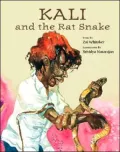
Whitaker not only gives us a picture of a faraway area—southern India—but she also depicts the prejudice of students presented with a classmate who is from a different class or culture. Kali hates school even though he is doing well there. When it was his turn to tell his name, his village, and his father's occupation, he was proud to say that his father was a snake catcher. But the other children laughed at him. Now he sits and eats alone, ashamed even of his unusual snack. It is only when a snake appears on the classroom roof, terrifying the teacher and students, that Kali gains respect and acceptance—for he knows how to capture it. Natarajan's watercolor paintings have a ruggedness that floods the scenes with the colors of place, but also with depictions of personalities. Kali is a dark-skinned youngster, almost a caricature. His classmates seem to be refined snobs, at first. The perhaps too easy resolution makes the visual differences seem to disappear in this lesson of self-worth and tolerant understanding of others. A helpful vocabulary list also includes an explanation of Kali's people, the Irula, who have traditionally made their living as snake catchers.School Library Journal
Gr 1-3-Kali has always been proud of his father, who is the best snake catcher in their Indian village. But when he attends school, the children make fun of his Irula ways. They are disdainful of what Kali eats, and they shun him. Friendless and lonely, he dreads school. But one day the classroom is visited by a six-foot-long rat snake. With the children screaming and the teacher hiding under his desk, Kali grabs it and becomes the class hero. The text is smoothly written, with lots of cultural details. The story moves at a good pace, with excellent use of text that leaves readers anticipating what will happen when each page is turned. Natarajan's stylized illustrations are a mixture of smaller pencil drawings and luscious larger paintings that seem to be done on silk. The endpapers resemble a beautiful batik fabric. Everything works together for an evocative presentation. This book has much to offer children learning about other cultures. It could also be used to begin discussions about bullying, prejudice, and acceptance.-Mary Hazelton, Elementary Schools in Warren & Waldoboro, ME Copyright 2006 Reed Business Information.Kirkus Reviews
In contemporary Southern India, an Irula boy named Kali experiences trouble fitting in at his school. He feels that the other children make fun of him in spite of his good marks and quick intelligence. When a rat-catcher snake threatens the safety of the children and the teacher, he whips into action using the techniques taught to him by his father, a well-known snake hunter in the region. He wins the admiration of all, and, in a pat reversal of fortune, is now deemed a hero and a friend. The more successful charcoal drawings are interspersed with energetic, yet unattractive watercolors. Kali's face is shown in a particularly grotesque fashion to emphasize his "otherness." There is no background on the Irula people and few readers will understand the cultural context of this slight story, but they will recognize the loneliness of the outsider in a classroom situation. (Picture book. 6-8)Book Details
Published
September 1, 2006
Publisher
Kane/Miller Book Publishers
Pages
32
Format
Hardcover
ISBN
9781933605104