
Social Scientists & Scholars, Political Theory & Ideology, Communism, Philosophical Positions & Movements, Political Biography
Available on Bookshop
Write a review
Books.org participates in affiliate programs including Bookshop.org and the Amazon Services LLC Associates Program. We may earn a commission from qualifying purchases made through links on this page, at no additional cost to you.
Log in to track your reading progress.
Overview
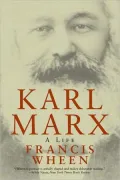
In this stunning book, the first comprehensive biography of Marx since the end of the Cold War, Francis Wheen gives us not a socialist ogre but a fascinating, ultimately humane man, while still examining the criticisms of his detractors. A study in contradictions, Karl Marx was at once a reserved scholar, a fiery agitator, and a gregarious socialite, while his intellect and ideology were once described as "Rousseau, Voltaire, and Hegel fused into one person." He lived both at the center and on the fringes of his age, and his oratory and writing continue to change the contemporary world. In his entertaining, offbeat style, Wheen offers an eminently readable biography of one of history's most unforgettable figures. "Wheen's portrait of Marx's life is artfully shaped and makes delectable reading."—New York Times "A magnificent portrait of Marx.... Bravo!"—A. N. Wilson "[E]xpertly researched, admirably objective, eminently humane, and plenty entertaining."—Boston Book ReviewSynopsis
"A brilliant book, by a superb author, about a necessary man."—Christopher Hitchens
Boston Book Review
[E]xpertly researched, admirably objective, eminently humane, and plenty entertaining.
Editorials
A. N. Wilson
A magnificent portrait of Marx.... Bravo!Boston Book Review
[E]xpertly researched, admirably objective, eminently humane, and plenty entertaining.Christopher Hitchens
A brilliant book, by a superb author, about a necessary man.New York Times
Wheen's portrait of Marx's life is artfully shaped and makes delectable reading.Publishers Weekly
"It is time to strip away the mythology," writes Wheen, "and try to rediscover Karl Marx the man." In the first major biography of Marx since the end of the Cold War, Wheen does just that as he looks for the man lurking behind the myths of both enemies and disciples, the misinterpretations and the academic jargon. What he finds is somebody who will suit nobody's purposes--Marx, Wheen argues, lived his life messily. He was neither a clearheaded revolutionary nor an unrepentant hypocrite, but he wasn't the anti-Christ either. More or less incapable of holding down a steady, salaried job, he mooched off of his selfless wife, Jenny (an aristocrat fallen on hard times), and his well-to-do ideological partner, Friedrich Engels, and spent his time obsessively writing unreadable, unmarketable economics tracts. He also spent a good deal of time preaching the imminent revolution of the masses (with whom he appears to have had little affinity). Following Marx from his childhood in Trier, Germany, through his exile in London, Wheen, a columnist for the British Guardian, takes readers from hovel to grand house, from the International Working Man's Association to Capital, from obscurity to notoriety and back again. (Only 11 mourners attended Marx's funeral.) The narrative veers unsteadily from scorn to admiration for the bearded philosopher. Wheen begins by jeering at Marx's cantakerousness and ends by lauding him as a prophet and a brave survivor of poverty and exile. In the end, Wheen's breezy, colorful portrayal is as eccentric as its subject. 16 pages of illustrations not seen by PW. (May) Copyright 2000 Cahners Business Information.|Library Journal
Little about Marx was left undiscovered by David McLellan's highly regarded Karl Marx: His Life and Thought (LJ 3/1/74), but left-leaning British journalist Wheen attempts to add some new understanding. Wheen does correct a small error that McLellan advanced about Charles Darwin's nonrelationship with Marx, but otherwise his book is notable less for the quality of the scholarship--which is solid enough--than for his deft portraiture. Wheen's Marx is often charming and likable--and just as often not. An earlier generation of biographers depicted an impoverished Marx dependent upon the generosity of collaborator Frederick Engels, but Wheen demonstrates that Marx actually led a bourgeois lifestyle beyond his means--mostly for the sake of his daughters, whom he adored. Engels seemed to regard Marx almost as a fortunate younger sibling would a brilliant but unlucky older brother. Wheen's book is engagingly written, but his editors have done him a disservice by retaining an overabundance of British colloquialisms that simply do not travel well across the pond. Still, Wheen's compelling depiction of the truly historic Marx-Engels friendship combines with a bold prose style to commend his book to serious academic and public libraries.--Scott H. Silverman, Bryn Mawr Coll. Lib., PA Copyright 2000 Cahners Business Information.\Booknews
In this reportedly first major post-Cold War biography of the author of the , "the most influential pamphlet in history," a British columnist for London's newspaper portrays this middle-class German as a paradoxical representative of the oppressed masses in his relationships with family, Engels, and Bakunin, et al. Includes photos of Marx (1818-83). First published in London in 1999. Annotation c. Book News, Inc., Portland, OR (booknews.com)Corson
Karl Marx: A Life is expertly researched, admirably objective, eminently humane, and plenty entertaining.—The Boston Book Review
Sylvia Nasar
Wheen has engagingly reinterpreted Marx's exhaustively annotated life...his portrait of Marx's life is artfully shaped and makes delectable reading.—The New York Times Book Review
Ben Timlott
Stunning… a witty, subtle, and beautifully written study that neither idolizes the old suer nor dismisses him… Wheen's Karl is a warm, rambunctious, imperfect, irresponsible, bundling giant.&#!51; The Independent
John Banville
… Wheen has read not only widely but deeply in the great man's work… his account of Capital , the most daunting of door stoppers, is nothing short of masterful… It is hard to think of anyone since Isaiah Berlin who has written so persuasively and compellingly on Marx… The common reader, if such a creature still exists, will find cause here to rejoice.— Irish Times
Kirkus Reviews
Superb life of the thinker who, for better or worse, molded the 20th century. Marx once proclaimed, famously, that he was not a Marxist. If pressed, British journalist Wheen would probably claim Marxist credentials—if of a distinctly irreverent stripe. (For example, his extraordinarily well-conceived biography of communism's guiding light is probably the first to press the comedy troupe Monty Python into exegetical service.) Wheen's satirical edge does not, however, make his study any less serious; it is as well-documented as Isaiah Berlin's 1963 biography—and certainly more interesting to read. Marx, Wheen allows, was a paradoxical sort: a Jew who disavowed Judaism; an ardent moralist who fathered an illegitimate child by a servant; a communist firebrand who lived well beyond his means and aggressively mooched off well-to-do acquaintances (especially his forbearing colleague Friedrich Engels). But Marx was also fearless, unafraid of a good fight, and accustomed to a life in which "grubby police spies from Prussia lurked all too conspicuously outside, keeping note of the comings and goings, while irate butchers and bakers and bailiffs hammered on the door." Wheen makes a number of useful revisions to the historical record; whereas many biographers paint Marx's relationship with the Russian anarchist Mikhail Bakunin as a bitter and hateful rivalry, Wheen documents that the two were friendly in person and borrowed liberally from one another's store of ideas. Engels emerges from the record, too, with his reputation restored: in Wheen's pages he is not the toady of other biographies, but a critical and thoughtful—ifsometimesbeery—participant in the shaping of Marx's thought. Wheen takes vigorous issue with those "countless wiseacres" who, on one hand declare that Marx's thought leads directly to the Gulag and, on the other, hold that Marx's ideas are irrelevant to the modern, post-Cold War world. Neither view, Wheen holds, is correct—and neither is useful to reckoning the extent of Marx's role in making the world in which we live. Respectful yet non-hagiographic, Wheen's life of Marx deserves a wide readership.Book Details
Published
July 1, 2001
Publisher
Norton, W. W. & Company, Inc.
Pages
431
Format
Paperback
ISBN
9780393321579