
Individual Artists, Puppets & Puppetry, General & Miscellaneous European Art, Cubism, Abstract Art, Modern Art
Log in to track your reading progress.
Overview
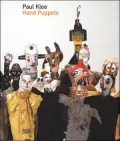
Between 1916 and 1925 Paul Klee (1879-1940) made some 50 hand puppets for his son, Felix, of which 30 are still in existence. For the heads, he used materials from his own household: beef bones and electrical outlets, bristle brushes, leftover bits of fur and nutshells. Soon he began to sew costumes. These characters and small works, do not pretend to be great art, but at the same time, they are superbly imaginative, sweetly reminiscent of Klee's relationships with his family, and beautifully illustrative of the artistic and social developments of the time. Readers will see the chronological proximity of Dada and Kurt Schwitters's collages in Klee's Matchbox Ghost; the German National caricatures one of the era's more ominous political types. An introductory essay tracks the work's links to other avant-garde puppetry and to Klee's sculptural works, and notes his connections to the theater. For their part, Klee's son Felix and his grandson Alexander tell the story of how the figures were created.Book Details
Published
October 1, 2006
Publisher
D.A.P./Distributed Art Publishers
Pages
128
Format
Hardcover
ISBN
9783775717403