
Earth Science, Social Work & Human Services, Meteorology & Atmospheric Sciences, Public Health & Safety, Politics & Government - General & Miscellaneous, Industrial Engineering & Materials Science, Management & Leadership, Industrial Engineering & Materia
Available on Bookshop
Write a review
Books.org participates in affiliate programs including Bookshop.org and the Amazon Services LLC Associates Program. We may earn a commission from qualifying purchases made through links on this page, at no additional cost to you.
Log in to track your reading progress.
Overview
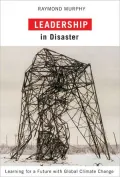
Murphy explores whether technological development inadvertently constructed new vulnerabilities, thereby manufacturing a natural disaster. As the extreme weather in the ice storm may foreshadow what will occur with global warming, Leadership in Disaster also explores the politics, economics, ethics, and cultural predispositions involved in climate change, investigating how modern societies create both the risks they assume are acceptable and the burden of managing them. An innovative comparison with Amish communities, where the same extreme weather had trivial consequences, is instructive for avoiding future socio-economic catastrophes.Synopsis
Disasters occur when hazards of nature strike socio-technological vulnerabilities. While science provides valuable indications of risk, it does not yield certainty, yet leaders must make sense of threats. Raymond Murphy's case study of the management of the 1998 ice storm - the most costly disaster ever in Canada, northern New York state, and Maine - presents rare interviews with key political and emergency management leaders that provide an insider's view of the challenge of responding to extreme weather. They document a generally well managed crisis, but also reveal the slippery slope from transparency to withholding critical information as the crisis deepened, and examine conflict resolution between leaders during a disaster.The study looks into whether technological development inadvertently constructed new vulnerabilities to nature's forces, thereby manufacturing a natural disaster. As this extreme weather may foreshadow what will occur with global warming, Murphy's interviews also explore the politics, economics, ethics, and cultural predispositions underlying climate change, investigating how modern societies create both risks they assume are acceptable And The burden of managing them. An innovative comparison with Amish communities, where the same extreme weather had trivial consequences, Is instructive for avoiding future socio-environmental calamities.Leadership in Disasteris a major contribution To The analysis of vulnerability, resilience, And The challenge of confronting environmental problems, such as global climate change, and a valuable resource for scholars and general readers seeking to learn more about how extreme weather disasters can be managed.
Editorials
From the Publisher
"Leadership in Disaster is beautifully written and deserving of a wide readership." Peter Dickens, University of Cambridge"A welcome addition to the field of disaster research which draws together classical and modern theories to argue for an epistemological expansion of the social sciences." Canadian Journal of Sociology
Book Details
Published
March 1, 2011
Publisher
McGill-Queens University Press
Pages
424
Format
Paperback
ISBN
9780773538726