
Join Books.org — it's free

Les Miserables (Movie Tie-In Edition)
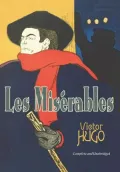
Les Misrables by Victor Hugo — book cover

Les Misrables

by Victor Hugo
Available on Bookshop Write a review

Books.org participates in affiliate programs including Bookshop.org and the Amazon Services LLC Associates Program. We may earn a commission from qualifying purchases made through links on this page, at no additional cost to you.

Log in to track your reading progress.

Overview

Les Misérables, first published in 1862, is one of the greatest novels of the nineteenth century--indeed, of all time. Written to improve the desperate plight of the poor and oppressed, this historical novel portrays the life of ex-convict Jean Valjean--a man unjustly imprisoned, buffeted by fate, and hounded by the ruthless detective Javert. Trying to redeem his life, Jean Valjean agrees to care for Cosette, a motherless young girl. But will his kindness prove his downfall? Find out in Victor Hugo's powerful masterpiece--a book that could very well change your life. Les Misérables is a big book, and most publishers try to pack it into small newsprint pages with tiny, nearly unreadable type. This edition, on the other hand, has been newly designed and printed on large-format, archival-quality paper with easy-to-read type, making it a deluxe volume at a still-reasonable price. Complete and unabridged.

Trying to forget his past and live an honest life, escaped convict Jean Valjean risks his freedom to take care of a motherless young girl during a period of political unrest in Paris.

About the Author, Victor Hugo

Victor Hugo
"If a writer wrote merely for his time, I would have to break my pen and throw it away," the larger-than-life Victor Hugo once confessed. Indeed, this 19th-century French master's works -- from the epic drama Les Misérables to the classic unrequited love story The Hunchback of Notre Dame -- have spanned the ages, their themes of morality and redemption ever applicable to our times.

Biography

Novelist, poet, dramatist, essayist, politician, and leader of the French Romantic movement from 1830 on, Victor-Marie Hugo was born in Besançon, France, on February 26, 1802. Hugo's early childhood was turbulent: His father, Joseph-Léopold, traveled as a general in Napoléon Bonaparte's army, forcing the family to move frequently. Weary of this upheaval, Hugo's mother, Sophie, separated from her husband and settled in Paris. Victor's brilliance declared itself early in the form of illustrations, plays, and nationally recognized verse. Against his mother's wishes, the passionate young man fell in love and secretly became engaged to Adèle Foucher in 1819. Following the death of his mother, and self-supporting thanks to a royal pension granted for his first book of odes, Hugo wed Adèle in 1822.

In the 1820s and 1830s, Victor Hugo came into his own as a writer and figurehead of the new Romanticism, a movement that sought to liberate literature from its stultifying classical influences. His 1827 preface to the play Cromwell proclaimed a new aesthetic inspired by Shakespeare, based on the shock effects of juxtaposing the grotesque with the sublime. The great success of Notre-Dame de Paris (The Hunchback of Notre Dame) confirmed Hugo's primacy among the Romantics.

By 1830 the Hugos had four children. Exhausted from her pregnancies and her husband's insatiable sexual demands, Adèle began to sleep alone, and soon fell in love with Hugo's best friend, the critic Charles-Augustin Sainte-Beuve. They began an affair. The Hugos stayed together as friends, and in 1833 Hugo met the actress Juliette Drouet, who would remain his primary mistress until her death 50 years later.

Personal tragedy pursued Hugo relentlessly. His jealous brother Eugène went permanently insane following Victor's wedding to Adèle. His daughter, Léopoldine, together with her unborn child and her devoted husband, died at 19 in a boating accident on the Seine. Hugo never fully recovered from this loss.

Political ups and downs ensued as well, following the shift of Hugo's early royalist sympathies toward liberalism during the late 1820s. He first held political office in 1843, and as he became more engaged in France's social troubles, he was elected to the Constitutional Assembly following the February Revolution of 1848. After Napoléon III's coup d'état in 1851, Hugo's open opposition created hostilities that ended in his flight abroad from the new government.

Declining at least two offers of amnesty -- which would have meant curtailing his opposition to the Empire -- Hugo remained in exile in the Channel Islands for 19 years, until the fall of Napoléon III in 1870. Meanwhile, the seclusion of the islands enabled Hugo to write some of his most famous verse as well as Les Misérables (1862). When he returned to Paris, the country hailed him as a hero. Hugo then weathered, within a brief period, the siege of Paris, the institutionalization of his daughter Adèle for insanity, and the death of his two sons. Despite this personal anguish, the aging author remained committed to political change. He became an internationally revered figure who helped to preserve and shape the Third Republic and democracy in France. Hugo's death on May 22, 1885, generated intense national mourning; more than two million people joined his funeral procession in Paris from the Arc de Triomphe to the Panthéon, where he was buried.

Author biography from the Barnes & Noble Classics edition of The Hunchback of Notre Dame.

Good To Know

Hugo was seen by his fans as a grand, larger-than-life character -- and rumors spread that he could eat half an ox in one sitting, fast for three days, and then work without stopping for a week.

Hugo owned a pet cat named Gavroche -- the name of one of the primary characters in Les Misérables.

The longest sentence ever written in literature is in Les Misérables; depending on the translation, it consists of about 800 words.

When Hugo published Les Misérables, he was on holiday. After not hearing anything about its reception for a few days, Hugo sent a telegram to his publisher, reading, simply:

"?"

The complete reply from the publisher:

"!"

Reviews

There are no reviews yet. Log in to write one.

Editorials

Kirkus Reviews

The Hunchback of Notre Dame (40 pp.; Sept. 1997; 0-531- 30055-2): A storybook retelling of Hugo's classic of the lonely bellringer and his hopeless love for the beautiful gypsy girl, Esmerelda, whom he rescues from hanging and the evil archdeacon Dom Frollo and reunites with her mother. While remaining relatively faithful to the original, this version from Wynne- Jones (The Maestro, 1996, etc.) is always competent, but never compelling. Slavin creates lovely illustrations, but his pale washes leave even the most festive scenes sedate. The volume lacks power or emotion; adults seeking an alternative—any alternative—to the Disney film may find that this one hardly competes for the hearts and minds of the target audience.

From Barnes & Noble

A rousing adventure story peopled with heartbreaking, unforgettable characters and a powerful allegory about the good and evil lying beneath the surfaces of human beauty, ugliness, and superior intellect.

Book Details

Published
December 19, 2012
Publisher
The Editorium
Pages
1120
Format
Paperback
ISBN
9781434103611

More by Victor Hugo

Similar books