
Nature & the Natural World - General & Miscellaneous, Animals - General & Miscellaneous, Flowers & Plants, Fiction - General & Miscellaneous
Log in to track your reading progress.
Editorials
Publishers Weekly
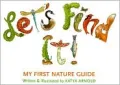
Let's Find It! My First Nature Guide by Katya Arnold uses a seek-and-find formula to help youngsters identify objects in the natural world. In each spread, various plants and animals appear labeled on the left, and the right-hand page features a full-bleed illustration in which all the elements are included. Final pages categorize the flora and fauna (plants, fungi, animals) and list where each can be found within the book. (Aug.) Copyright 2002 Cahners Business Information.Children's Literature
Suppose you were trying to find a book to introduce nature to a very young child. What would you look for? Really good pictures would be at the top of my list, either clear, lively photographs or accurate, well-executed artwork. This would be especially true if the book were primarily pictures with very little text. This fancifully illustrated picture book would, however, not be my first choice, because the pictures, while not without charm, overflow with inaccuracies. The book consists of ten complex full-page illustrations of various nature scenes. On the facing pages, the author has painted and identified a dozen or so individual animals or plants, in the manner of a field guide, which the child is challenged to find in the larger picture. This concept is spoiled by awkward compositions in the larger illustrations, where perspective becomes so confused that hummingbirds rival crows in size and Canadian geese are depicted as half the height of weeping willow trees. As well, seasonal inaccuracies are disturbing—plants and flowers which do not bloom simultaneously in some scenes, as well as particularly glaring anomalies in an autumnal picture—since this is a self-described nature guide. There are better introductions to nature for the young than this. 2002, Holiday House,— Michele Tremaine
School Library Journal
PreS-Gr 2-This field guide to plants and animals is also a visual adventure. Between the author's introduction and an appended few pages labeling the parts of plants, fungi, and animals are 10 illustrated spreads. Labeled pictures of animals and plants appear on the verso; each one can also be found in the painted scene facing it. While the settings (pond, woods, etc.) are not identified, most will be obvious. As the author notes, sometimes the individual forms in the painting look quite different or less distinct than their labeled counterparts; they may be depicted from a different angle or grouped with other creatures or plant life. Generally, the depictions of plants are more successful than those of the animals; the pictures of the two children are awkward. Despite these shortcomings, the book will have an audience, especially in early primary classroom nature units. With adult help, students will be able to glean knowledge of the natural world while having fun finding hidden pictures.-Anne Chapman Callaghan, Racine Public Library, WI Copyright 2002 Cahners Business Information.Kirkus Reviews
Two dozen plants and animals are hidden in plain sight on each page of this nearly wordless picture book. Thumb-sized plants and animals are painted and labeled against a white background on the left-hand page, while they appear as part of a fully developed watercolor painting on the right-hand page. The author invites children to find the plants and animals in the paintings while following a dog and cat that are exploring nature inside and outside in the city and country, in a meadow, pond, forest, and at the beach. Both common and unusual plants and animals are included. City dwellers will notice the pigeon, starling, and squirrel, while in the woods they are shown a bear, deer, fox, and porcupine. Flowers include Queen Anne's Lace, thistle, chicory, and pokeweed as well as jack-in-the-pulpit and trees like the white spruce. Some illustrations are more successful than others. The sparrow is recognizable, but the mouse is not, and the bats and children are awkwardly drawn. The author concludes with more information on plants and animals and identifies those that appear on each page, giving common names. An entertaining first-look for nature lovers. (Nonfiction. 3-6)Book Details
Published
April 1, 2002
Publisher
Holiday House
Pages
32
Format
Hardcover
ISBN
9780823415397