
Civil Rights - Movements & Figures, African Americans - Politics and Government - History, 20th Century American History - Civil Rights, Political Activists & Social Reformers - U.S. Political Biography, U.S. Politics & Government - 1963-1969, Civil Right
Log in to track your reading progress.
Overview
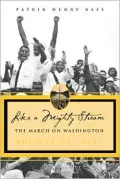
The March on Washington for Jobs and Freedom, held in the nation's capital on August 28, 1963, is recognized as a watershed moment in American history. It was epochal; one of the most significant events of the 20th century. The New York Times called the March "the greatest assembly ever seen." No public event before or since has had the social, cultural or political impact of The March on Washington for Jobs and Freedom. Although the civil rights movement was at full-throttle in 1963, many Americans were distracted by the homespun humor of The Andy Griffith Show and the whimsy of My Favorite Martian on television; entranced by Lesley Gore's "It's My Party" and The Beatles "She Loves You" on the radio; and entertained by the fantasy of Jason and the Argonauts and Alfred Hitchcock's improbable thriller "The Birds" at the drive-in. On August 28, 1963, the world focused its attention to the nation's capital, where more than 250,000 Americans gathered-black and white; young and old, privileged and poor, and from every region of the country to show their support for the passage of an historic civil rights bill that would end legal segregation in America. Like A Mighty Stream: The March on Washington, August 28, 1963 (Running Press; Hardcover; November 1, 2002; $18.95; 0-7624-1292-5) is a retrospective illumination of the events that led to the March. The book zeroes in on the leaders who made it happen, and explores the impact it had on the people who attended. It illuminates one of the most intense moments of the Civil Rights Movement. In anticipation of the March's 40th anniversary next year, author and journalist Patrik Henry Bass integrates the remembrances of everyday and extraordinary Americans who attended, including NPR correspondent Vertamae Grosvenor, Georgia representative Nan Grogan Orrock, and 60 Minutes correspondent Ed Bradley, Jr. Their memories of the day widely differ. Some recall the day as one of the hottest of their lives; others thought it was a mild summer day. There are varying accounts of how many people attended, and there are differences about the progress that was has been made four decades later. Where they agree is that this was one of the greatest days in American history: an unparalleled celebration of humanity and hope. Included in the book are 14 photos-some never before seen. This is a must-have for anyone interested in American history, or in learning about the power of nonviolent protest to effect social change.About the Author
Patrik Henry Bass is an award-winning author and journalist, who has written and edited for many publications including The New York Times, The Washington Post, Entertainment Weekly and Essence, where he is books editor. He is co-author of the national bestseller In Our Own Image: Treasured African American Traditions, Journeys and Icons (Running Press, 2001). úau.
Editorials
Newsweek
Down from the base of the soaring Washington Monument they flowed, with the deep inner rhythm of a sea surging to high tide. Never had so many Americans come to their Capital to lay their grievances before their government and their nation.The Washington Post
Prodded by the idea that we were losing a good deal of our collective memory of the event, Bass, the books editor of Essence magazine and co-author of an earlier study of African-American folklore and material culture, In Our Image, set out to reconstruct both the remarkable magnitude and significance of the March, while supplying the broader historical backdrop that informed it. — Chris LehmannTime
The March on Washington was a triumph.Publishers Weekly
On August 28, 1963, a quarter of a million people from all walks of life came together in Washington to demand justice in the struggle over civil rights. President Kennedy had just introduced his civil rights bills (signed into law by President Johnson in 1965), and the nation's most influential leaders had called for a rally to signal their support. Bass, the books editor at Essence and co-author of In Our Own Image, eschews dry, documented history in favor of interviewing people who participated in the event and writing from the heart. The result is a compelling, emotional narrative that brings to life the trials and tribulations of black Americans in the era, the struggles over organizing the march and its resounding success. Bass includes some discussion about the cancelled 1941 march on Washington, which President Roosevelt forestalled by issuing an executive order prohibiting discrimination in defense industries (Asa Randolph, who organized the 1941 event, was also instrumental in planning the 1963 march). Bass also brings to light some of the arguing behind the scenes, most importantly the disagreement over a speech planned by John Lewis, the chairman of the Southern NonViolent Coordinating Committee. And of course much coverage is given to Martin Luther King's brilliant address, which is printed in full in this slim book. Readers interested in the civil rights movement will find this an important overview of a critical event in America's often tortured history of race relations. (This was published in October of 2002 - but the 40th anniversary of the march is this year.) Copyright 2003 Reed Business Information.Library Journal
The 1963 March on Washington for Jobs and Freedom, which drew more than a quarter million people, was a defining national moment, signaling the American public's embrace of the Civil Rights Movement and leading to passage of the Civil Rights Act of 1964, Bass argues. Probing the march's dimensions, Bass (co-author, In Our Own Image) examines its multiracial, multidenominational, multiclass elements; eyewitnesses from journalist Ed Bradley to a 13-year-old at the time recount various perspectives on the march and its meaning then and now. The result gives texture to the days beyond Rev. Martin Luther King Jr.'s "I Have a Dream" speech and amplifies a surprisingly slight literature on the subject, still led by James Haskins's 1993 The March on Washington. Recommended for collections on African American and U.S. history and politics and essential for any collection on U.S. civil rights.-Thomas J. Davis, Arizona State Univ., Tempe Copyright 2003 Cahners Business Information.Book Details
Published
December 21, 2002
Publisher
Philadelphia : Running Press, c2002.
Pages
160
Format
Hardcover
ISBN
9780762412921