
Slavery - Social Sciences, Presidents of the United States - Biography, Civil War and Reconstruction - African American History, Slavery & Abolitionism - African American History, 19th Century American History - Politics & Government - Presidents, Union -
Available on Bookshop
Write a review
Books.org participates in affiliate programs including Bookshop.org and the Amazon Services LLC Associates Program. We may earn a commission from qualifying purchases made through links on this page, at no additional cost to you.
Log in to track your reading progress.
Overview
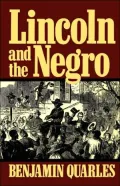
First published in 1962, Lincoln and the Negro was the first book to examine in detail how Lincoln faced the problem of the status of black people in American democracy, and it remains unsurpassed. Starting with Lincoln’s childhood attitudes, Benjamin Quarles traces the development of Lincoln’s thought in relation to the African American, a development which was to culminate in the Emancipation Proclamation. Concerned at first with methods of colonization outside the United States, Lincoln came later to advocate not only emancipation of the slaves, but also equal political rights for them. In addition, he was the first president to invite black Americans to the White House and to treat them as equals. Black attitudes towards Lincoln evolved almost as much Lincoln’s own attitude. When he was first elected, blacks expected very little from Lincoln. But he slowly gained their respect—by recognition of individual African Americans, by placing them in the Union Army, and ultimately by the Emancipation Proclamation. His assassination served to enshrine him as a hero for the newly freed slaves. Lincoln and the Negro, in examining both sides of the relationship, is a vitally important contribution to our understanding of Abraham Lincoln and of American democracy itself.Book Details
Published
August 1, 1991
Publisher
Da Capo Press
Pages
288
Format
Paperback
ISBN
9780306804472