
History & Criticism - Architecture, Construction & Building Trades, Construction & Building Trades, Architectural Time Periods & Styles
Log in to track your reading progress.
Overview
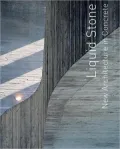
Produced at a rate of five billion cubic yards per year, concrete is the second most widely consumed substance on earth, after water. It is ubiquitous and easily taken for granted as the stuff of sidewalks and roads, power plants and parking garages. Concrete is also, however, a favored material of cutting-edge architects and engineers, who value not only its versatility and strength but its unlimited potential for imaginative expression. A hybrid substance made from cement, water, sand, and mineral aggregates, concrete—or liquid stone—has no intrinsic form. In the hands of talented designers, its ultimate appearance is dictated by the framework into which it is poured and the color, texture, or pattern applied to its surface.In a series of essays by top architects, engineers, and scholars, Liquid Stone explores the nature of concrete, its past and future, from technical, artistic, and historical perspectives. Over thirty buildings by leading international architects including Jean Nouvel, Herzog & de Meuron, Zaha Hadid, Steven Holl, Norman Foster, and Santiago Calatrava are presented through detailed descriptions, photographs, and technical drawings.
The book concludes with "The Future of Concrete," a chapter on newly emerging materials. Here self-consolidated, ultra-high-performance, and translucent concrete are illustrated, introducing the next generation in concrete technology and suggesting new directions for both architecture and engineering.
Editorials
Library Journal
Frequently reviled by the public, employed in enormous quantities by the building industries, and admired for its strength and plasticity (though susceptible to deterioration under certain conditions), concrete makes possible the expressive forms and continuity of structure central to modern architecture. It was first used for buildings in ancient Rome, and its place within the history of architecture continues to be debated. Is it a harsh industrial material unsuitable for aspirant forms or a medium of unparalleled flexibility and expressive possibility? This book offers an intelligent answer to that question as well as a tribute to concrete itself. Editors Cohen (Inst. of Fine Arts, NYU; Encyclop die Perret) and Moeller Jr. (AIA Guide to the Architecture of Washington, D.C.) have compiled contemporary examples in four groups-structure, surface, sculptural form, and the future of concrete-each preceded by a cogent historical essay. Illustrative material in the form of superb color photographs, sketches, plans, sections, and diagrams complement an international selection of powerful and dynamic forms. Since the interiors are well illustrated, this book is recommended for all architecture and interior design collections.-Paul Glassman, Hofstra Univ. Lib., Hempstead, NY Copyright 2006 Reed Business Information.Book Details
Published
June 18, 2026
Publisher
Princeton Architectural Press
Pages
248
Format
Hardcover
ISBN
9781568985701