
Foreign Language Study, Children - Social Issues, Children - Games & Activities, Children - Health & Medicine
Log in to track your reading progress.
Overview
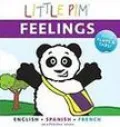
The Little Pim book series adapts the most successful and effective elements from the award-winning Little Pim DVDs to promote fun with languages for young children. Each book incorporates an exciting blend of illustrations and photographs, as well as flaps and pull tabs to keep readers engaged. The stories are told in English, with words featured in Spanish and French (the most popular languages in the DVD series). Pronunciation guides for parents are included.
Colors showcases colors and objects, and Feelings focuses on emotions and expressions. Each book weaves its vocabulary into a hide-and-seek story featuring Little Pim as the narrator and concludes with a helpful review of the words learned.
Editorials
Publishers Weekly
Launching an interactive reading series based on the Little Pim foreign-language learning products, this story centers on panda Little Pim's emotions when he gets lost. Readers are asked to pull tabs and lift flaps to reveal photographs of human children whose facial expressions match Pim's feelings; the emotions (scared, shy, etc.) are translated into French and Spanish along with phonetic pronunciations. One boy smiles in his first image, but after pulling the tab, he's fearful like Pim. Another boy happily holds a milkshake in his picture: "Oops! He's not scared!" Levine smoothly integrates foreign language vocabulary into her lesson on recognizing emotions. Available simultaneously: Little Pim: Colors. Ages 4–8. (Aug.)Kirkus Reviews
This familiar name in language instruction turns out lackluster stories for a toddler audience. Little Pim plays outside and meets a caterpillar. Correlating colored type indicates the panda's varied feelings in English, Spanish and French, with pronunciation. The corresponding page features three photographs of individual children; lifting flaps or pulling tabs reveals two of the youngsters acting out the specific emotion (always a boy and a girl to depict the variations), while the third child is a decoy. The clunky phrases follow a straightforward but uninspired presentation. "The caterpillar leads Little Pim back to his tree! / But then she disappears. / Where did his new friend go? / Little Pim feels sad / triste [TREES-teh] / triste [treest]." The small type makes easy reading a challenge. The companion Colors follows much the same format as Little Pim looks for different-colored balloons for a celebration. These interactive elements allow for easy exploration, though the wooden tone dampens enthusiasm in both selections. Unfortunately, Little Pim's day is bland no matter how you say it. (Board book. 2-4)Book Details
Published
August 1, 2011
Publisher
Abrams, Harry N., Inc.
Pages
10
Format
Paperback
ISBN
9781419700187