
Settings & Atmosphere - Fiction, Love & Relationships - Fiction, European Peoples & Cultures - Fiction & Literature, European Fiction - General
Log in to track your reading progress.
Overview
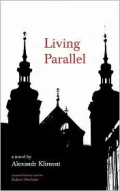
This novel about conflicts of conscience explores an unusual love triangle of a man, a woman, and the Czech countryside. Mikulaš is an architect who has spent his career designing prefab high-rise apartment blocks in Prague, when his dream has been to design garden apartment complexes in the countryside that he loves. Finally winning the heart of an artist named Olga, a woman he first fell in love with 20 years earlier, Mikulaš must now make a decision between her and his homeland. Filled with striking images, fresh metaphors, and colorful language, this beautiful, reflective novel examines both the spiritual limitations imposed by communism and a life abandoned and started anew.
Editorials
Josef Skvorecky
In the literature of dissent of the communist years, this is an exceptional story, quite different from what the reader expects of a book from that period: elegant, absorbing, and simply beautiful.Publishers Weekly
A nimble translation ably conveys the simple beauty of Kliment's complex novel, published in Czech in 1977, which ponders the impact of politics on human emotions in a country under Communist rule. The time is 1967 in the city of Prague, its crumbling ancient churches and clock towers standing side by side with reminders of Soviet oppression and postwar gloom. Mikul s Svoboda, a 40-year-old architect, is living his life as an observer, seemingly calm, but on the verge of losing control. Mikul s designs buildings that conform to government strictures, in spite of his desire to strike out on his own. He is forever dreaming about preserving the beauty of his beloved countryside, and through his eyes we view the grand history of Prague in its monuments and buildings. Mikul s must confront the reality of his future and that of his country when Olga, a widowed painter and longtime love interest who has decided to move to Paris, asks him to join her. For Mikul s, reality is anchored in his connection to his friends, and in particular the women in his life: Jarmila, translator and ex-wife; Mil dka, lover and "luggagette" at the Central Railroad Station; and Olga. Responsibility and loyalty are weighed against freedom and self-determination in this finely wrought novel, and the powerful pull of home and beauty in all sorts of forms is affirmed. (Feb.) Forecast: Wechsler, the publisher of Catbird Press, chose to translate this novel himself; Ivan Kl!ma wrote an unsolicited foreword. Kliment is yet another of the many excellent writers to come out of Communist Czechoslovakia and Living Parallel fills a gap in the annals of dissident literature. Copyright 2001 Cahners Business Information.Library Journal
The tiny Czech Republic continues to astound the world with the quality of its literature, and this novel, which introduces English speakers to Kliment, is yet another example. In exquisite prose, Kliment offers an introspective study of an architect forbidden to create in a time and place ruled by Stalinist ideology. Mikul s Svoboda lives a parallel life in which the countryside has become his solace even as he is required to design hideous prefab apartment blocks that may last possibly 20 years. His marriage fails because of his unrequited passion for Olga, remembered from his youth. Then suddenly he is offered the opportunity to leave Czechoslovakia with the recently divorced Olga. In this extended meditation on the nature of exile from one's homeland, Kliment moves fluidly from the present to the past and back again as Mikul s grapples with the tension between his love for Olga and his attachment to the land. Poetically translated by Wechsler and introduced by Ivan Kl!ma, another Czech author who has explored the stifling of artistic ability under communism, this work is essential for any library collecting European fiction. Andrea Caron Kempf, Johnson Cty. Community Coll. Lib. Overland Park, KS Copyright 2001 Cahners Business Information.Kirkus Reviews
Memory and meditation dominate this alternately static and absorbing 1977 tale, the first of this Czech author's four novels to appear in English. The story is presented as the first-person narrative of Mikulas Svoboda, an architect who upon turning 40, in 1967, looks back over his earlier life, loves, and submissive "accommodation" to a communist regime that stifled his lifelong desire to create living spaces "in harmony with . . . the landscape I had a personal connection to." Instead, he has obeyed orders to "Build quickly, build cheaply," and thus avoid the fates suffered by his brother Beda (accused of "sabotage" and gently decaying in a lunatic asylum), and by several other friends and colleagues who enter the novel only as quickly sketched memories. These latter include Stepan, a cautious Catholic priest; Mikulas's pragmatic supervisor Dr. Rychta; and a former mentor Kormund, the unlucky perpetrator of a botched fake assassination attempt on a politician who "needed to show that people were threatening him." Mikulas's decision to "live parallel" (i.e., alongside, but detached from, the reality destroying his country's landscape and its spirit) sets him at odds with almost everyone he encounters, and crystallizes in his tangled relations with three women: his former wife Jarmila, a petite, strong-minded literary translator; his sometime mistress Miladka, a "luggagette" whom he meets at a railroad station; and the love of his life Olga, a widowed painter whose imminent departure from Prague to live in Paris is the stimulus for Mikulas's lengthy vacillations between her claims on him and those that his country and culture continue to exert. The resulting structure of episodic,nonsequential thematic clusters with virtually no narrative tension offers, at its best, echoes of Boris Pasternak's ineffably meditative "novels"; at its worst, frequent tedium. Kliment, a member of the Prague Spring literary generation (Vaclav Havel, Josef Škvorecký, Milan Kundera, et al.), is clearly a gifted, thoughtful writer, but Living Parallel isn't much of a novel.Book Details
Published
June 8, 2026
Publisher
Catbird Press
Pages
238
Format
Hardcover
ISBN
9780945774518