
Politics & Gay Rights, Criminology - Bias Crimes, Gay Men Biographies, Homophobia, Murderers, Suspects & Victims - Biography
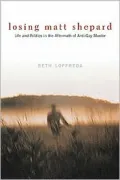
Available on Bookshop
Write a review
Books.org participates in affiliate programs including Bookshop.org and the Amazon Services LLC Associates Program. We may earn a commission from qualifying purchases made through links on this page, at no additional cost to you.
Log in to track your reading progress.
Overview
The infamous murder in October 1998 of a twenty-one-year-old gay University of Wyoming student resonated deeply with America's bitter history of violence against minorities. Losing Matt Shepard shows how the politics of sexuality -- perhaps now the most divisive issue in America's culture wars -- unfolds in a remote and sparsely populated area of the country, while exploring why the murder still haunts us -- and why it should.Editorials
School Library Journal
As the author examines the cultural repercussions of Shepard's death, she also provides an objective history of hate crimes and the efforts at legislation, taking both extreme conservatives and extreme liberals to task along the way.
Martin Duberman
Enormously skillful and moving. . . . An account of extraordinary subtlety.Patricia Schroeder
A must-read for understanding the cultural wars still raging in the twenty-first century.Boston Globe
A brilliant book full of cool reason and flashing insight.David L. Kirp
Beth Loffreda has crafted a richly layered narrative that encompasses both the deed and the community where it occurred.From The Critics
On October 6, 1998, Matthew Shepard, a twenty-one-year-old gay student at the University of Wyoming, dropped by the Fireside Bar in downtown Laramie for a drink. The next day he was found lashed to a fence, beaten, pistol-whipped, unconscious and barely breathing. Five days later, he died. The book, written by a professor at the University of Wyoming, is a mixture of observations, local newspaper accounts and dozens of interviews. Though a tad academic, this sensitive, thought-provoking work explores whether there was something about Laramie itself that made Shepard's murder possible.—Ann Collette
Publishers Weekly
In 1998, the brutal murder of Matthew Shepard, a 21-year-old University of Wyoming student, shocked the country. His death and the subsequent trials of his two (ultimately convicted) murderers made headlines for more than a year. In this pungent and astute account, Loffreda, an assistant professor of English at Shepard's alma mater and the faculty adviser to the campus's Lesbian, Gay, Bisexual, Transgender Association, details not only the murder and trials but also the profound effect of the ensuing publicity upon a basically decent and friendly community. Loffreda mixes a journalist's sharp eye with a sociologist's attentiveness to such issues as class, race, homophobia and gender, deftly bringing together interviews with Laramie's gay and straight residents, news reporting and cultural analysis. By debunking much of the media coverage (Shepard was not tied to a fence like a scarecrow), humanizing those convicted of the crime (Chasity Pasley, who supplied a fake alibi for one of the killers, worked closely with the campus gay group) and raising difficult questions (gay residents of Laramie were furious that little of the intense fund-raising for lesbian and gay causes that occurred around Shepard's death benefited local gay causes), she paints a judicious portrait of how such a murder could happen, and how the town was caught in the jaws of the national media circus that ensued. Getting behind the headlines, preconceptions and easy stereotypes, Loffreda has produced a book that mixes intelligence and compassion with crack reporting and sharp insight. (Oct.) Copyright 2000 Cahners Business Information.Library Journal
Loffreda, an assistant English professor at the University of Wyoming and the straight faculty adviser to the campus Lesbian Gay Bisexual Transgender Association, was new to the state in October 1998 when the brutal murder of 21-year-old Matt Shepard immediately became a flashpoint for the politics of sexuality in America. In an attempt to understand how and why this murder and not others in Laramie or around the country came to represent such deep-seated polarization, Loffreda observed and interviewed long-time locals, students, and the many people who descended on Laramie after the murder, including activists, journalists, politicians, and homicide investigators. In the aftermath of the media frenzy, Laramie narrowly passed a bias crimes law. This well-written account gets beyond the area's demographics and typical responses to the crime to uncover uncomfortable complexities and contradictions that belie our assumptions about this episode, which is far from the end of the story. This is a good cross-over book for understanding the complexity of peoples' struggle for (and opposition to) gay rights. Recommended for all public libraries. [See "Revisiting Laramie after the Trauma," p. 237, for an interview with the author.--Ed.]--James E. Van Buskirk, San Francisco P.L Copyright 2000 Cahners Business Information.\School Library Journal
YA-Matt Shepard was tied to a fence and fatally beaten by two young men in Laramie, WY, in 1998, because he was gay. After his death, he was taken up as a symbol by various groups: rock stars wrote songs about him, celebrities gave speeches, proponents of hate-crimes legislation rallied with renewed rage. Christian Fundamentalists picketed not only the trial, but also the young man's funeral. One of the first questions Loffreda asks is: "Why Matt?" It can't be, as some rightists have claimed, "just because he was gay." There were 33 other anti-gay murders that year that received little or no attention. Did the fact that Matt was white, blond, good-looking, and clean-cut contribute to his media "appeal?" Was the crime's location a factor? How about gender? Two Laramie girls had been raped and killed around the same time. Did his murder resonate more because there are so many crimes against females that they no longer make "good copy?" Such questions are asked in the spirit of inquiry, not accusation, and lead to new thought. As the author examines the cultural repercussions of Shepard's death, she also provides an objective history of hate crimes and the efforts at legislation, taking both extreme conservatives and extreme liberals to task along the way. This is a timely book for today's YAs, as they begin to question the attitudes and patterns of the political and social spheres they're soon to inherit.-Emily Lloyd, Fairfax County Public Library, VA Copyright 2000 Cahners Business Information.Booknews
The infamous murder in October 1998 of a gay student of the University of Wyoming ignited a media frenzy and struck a chord with people across the country. Loffreda, a straight faculty advisor to the campus Lesbian Gay Bisexual Transgender Association explores why the murder still haunts us. She draws on interviews with students, townspeople, police officers, and politicians, and shows how the politics of sexuality unfolded in a remote and sparsely populated area of the country. The author is assistant professor of English and adjunct professor of women's studies at the University of Wyoming. Annotation c. Book News, Inc., Portland, OR (booknews.com)Book Details
Published
October 25, 2000
Publisher
New York : Columbia University Press, 2000.
Pages
208
Format
Hardcover
ISBN
9780231118583