
Jazz & Blues Musicians - Biography, Music - Blues & Jazz, African American Entertainers - Biography
Log in to track your reading progress.
Synopsis
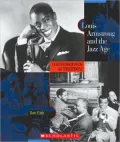
Cornerstones of Freedom, Second Series, is the updated and newly designed extension of the acclaimed original series. Focusing specifically on key events in American history, from colonial times to the present day, the Cornerstones books support history, social studies, and geography curricula for middle-school students. Each book includes expanded subject coverage, subheadings, informative sidebars, glossary terms, timelines, and additional resources, as well as an attractive new design and dramatic photographs. In 1900, Louis Armstrong was born to a teenage mother in a depressed part of New Orleans. Jazz was born at around the same time. From the moment Louis began playing the trumpet as a young boy, it was hypnosis at first hearing, said another young musician. Louis would go on to become one of the major driving forces behind the development of jazz, one of America's most important native-born art forms. Elish describes the emergence of the Jazz Age in American society and Armstrong's role in its success.Editorials
Children's Literature
Focusing on Armstrong's New Orleans childhood and early career, this book includes information available in most Armstrong biographies. Readers learn basic facts about Armstrong, his peers, and the essence of the Jazz Age. By age seven, Armstrong played a horn to announce his employers' coal wagon. He performed with the Colored Waif's Home's brass band. Bandleader Joe Oliver taught Armstrong cornet lessons and invited him to Chicago, where they developed an innovative sound and made recordings. Armstrong traveled to New York City and often played rhythmically without sheet music in a style called swing, which other performers, including Duke Ellington, adopted. Returning to Chicago, Armstrong formed a band and sang, effortlessly scatting wordless sounds. Gifted at improvising while he played, Armstrong's solos wowed audiences. He performed on Broadway, enhancing his celebrity. Mentioning how the Depression and rival bebop affected jazz, the text briefly summarizes Armstrong's European performances and post-Jazz Age life. Contextual discussion is lean, omitting southern blacks' Great Migration to northern cities, minimizing the Harlem Renaissance, and overlooking how Armstrong's musical creations play active roles in modern culture. Sidebars feature notable Jazz Age figures, quotes, and slang. The glossary and timeline are useful. Students writing papers will need more than the short resources list, which does not include the Louis Armstrong House & Archives website. This biography is part of the "Cornerstones of Freedom, Second Series." 2005, Children's Press/Scholastic, Ages 9 to 11.—Elizabeth D. Schafer
Book Details
Published
September 1, 2008
Publisher
Children's Press(CT)
Pages
48
Format
Paperback
ISBN
9780531208373