
Surrealism & Dada, Individual Artists, French Art, Modern Art, Benelux Art
Log in to track your reading progress.
Overview
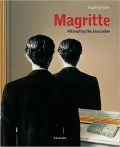
The ongoing relevance of Belgian painter Rene Magritte may lie in the semiotic character of his work and its ability to create chasms between the world, its surfaces and the signs we use to occupy it. Magritte's paintings offer a space for the viewer to contemplate the emptiness of signs and to locate that emptiness in a world we recognize--indeed, the artist relies on the props of normalcy in order to upend, invert and collapse them into the terra incognita where life leaves off and art begins. "The mind loves the unknown," he avowed, "it loves images whose meaning is unknown, since the meaning of the mind itself is unknown." In Attempting the Impossible we have a new definitive Magritte monograph, replacing David Sylvester's volume of the early 1990s. Featuring more than 300 works, it contains much unpublished material and includes chapters covering Magritte's photography, drawings and influence on German and American contemporary art. Each chapter opens with a close reading of a key work--such as "The Treachery of Images" ("This is not a pipe") of 1928-29--and a reconstruction of its intellectual and historical contexts. Art historian Siegfried Gohr examines Magritte's marriage and friendships, the phases of his work (from his sunlit Renoir period and his "periode vache" to his bright and visually arresting postwar work, which had such an influence on the advertising industry), the Belgian roots of his wit and sensibility and his word paintings and investigations into the paradoxes of representation.Book Details
Published
June 1, 2009
Publisher
D.A.P./Distributed Art Publishers
Pages
324
Format
Hardcover
ISBN
9781933045931