
Gynecology & Obstetrics, Sex Education, Reproductive Medicine & Technology, Embryology, Philosophy of Science - General & Miscellaneous, Biology - Developmental
Log in to track your reading progress.
Overview
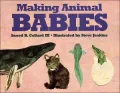
In this accessible and informative picture book, take a journey throughout the animal kingdom and explore the many ways animal babies are created. From sea sponges, to frogs, to tigers and dolphins, look at the ways animals find and attract mates and how the reproductive process works.
Describes the mating rituals and reproductive methods of a variety of animals, including flatworms, jellyfish, chameleons, and walruses.
Editorials
From the Publisher
"Good books for young children about reproduction are a rarity and are eagerly sought by libraries and parents alike. This is one of them . . . "An attractive, informative, approachable look at a delicate subject."—School Library Journal, starred review School Library Journal, StarredChildren's Literature -
This informative book takes readers through the animal kingdom and explains the myriad ways in which animal babies are created. It starts with simple water organisms that bud or split from the parent, or simply break off on their own. Collard then explains that most animals procreate by sexual reproduction and discusses how the sperm and egg are brought together to make the next generation. The book discusses the mating process, explaining that chameleons show bright colors to attract a partner, walruses fight with their tusks, birds build elaborate structures to impress a partner, and fireflies light up the sky. Spectacular three-dimensional collage illustrations bring the book to life. Especially noteworthy are pictures of a developing chimpanzee embryo and of a cat giving birth. There is a helpful glossary at the end of the book. Making Animal Babies is a follow-up to the acclaimed Animal Dads. 2000, Houghton Mifflin Co., Ages 4 to 8, $16.00. Reviewer: Julie SteinbergSchool Library Journal
PreS-Gr 2-Good books for young children about reproduction are a rarity and are eagerly sought by libraries and parents alike. This is one of them. The dual text (one very simple sentence for the child and another more complex explanation for the adult that will help answer inevitable questions) keeps perfect step with Jenkins's eye-catching, colorful cut-paper collage illustrations. A variety of asexual reproductive methods, such as budding and fission, and sexual behaviors are described and depicted, as are embryo development and birth. "Human animals" are not mentioned. Some purists may carp at the term "babies," but it is perfect for the intended audience. An attractive, informative, approachable look at a delicate subject.-Patricia Manning, formerly at Eastchester Public Library, NY Copyright 2000 Cahners Business Information.|Kirkus Reviews
Continuing the story of Animal Dads (1997), artist Steve Jenkins provides more striking paper collages while author Sneed Collard III pens a brief text, which includes some sophisticated biology about asexual and sexual reproduction in animals. Several unusual forms of asexual reproduction are included, for example: budding, splitting, breaking, and stacking. Sexual reproduction begins with a discussion of eggs and sperm, then shows some of the techniques animals use to attract a mate: sporting bright colors, fighting, flashing, and nest-building. The final section describes embryos developing in eggs and in the mother's womb. Usually the author provides a line of text in large type for younger readers, which is expanded in a paragraph in small type appearing elsewhere on the page. Unlike with Animal Dads, where younger children could read the illustrations, emerging readers will have more trouble here. The publishers recommend ages four through eight, but most sections would be more useful for middle-grade students, as the picture-book format will discourage browsing. Paper collages are handsome, though the layout—which poses an animal on every page, each on a different colored background, and none made to scale—is distracting. For example, the bower bird is shown page left, building his next; while page right shows two enormous night-lit fireflies, each as large as the bird. The author concludes with a glossary of science terms. Though interesting, this not as successful as past collaborations. (Nonfiction. 8-10)Book Details
Published
March 1, 2001
Publisher
Houghton Mifflin (Trade)
Pages
32
Format
Binding
ISBN
9780395953174