
General & Miscellaneous Historiography, Records Management, Special Libraries & Special Collections
Available on Bookshop
Write a review
Books.org participates in affiliate programs including Bookshop.org and the Amazon Services LLC Associates Program. We may earn a commission from qualifying purchases made through links on this page, at no additional cost to you.
Log in to track your reading progress.
Overview
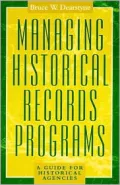
Historical records are a focus and collecting area for many historical societies, history museums, and other historical agencies. Yet many historical records programs face special challenges and needs, including inadequate resource levels, physical preservation problems, and underdeveloped documentation, appraisal, and collecting policies. In Managing Historical Records Programs, Bruce Dearstyne's goal is to foster stronger, more vibrant historical records programs by introducing the basics of archival work to historical agency personnel. He describes strategies, approaches, principles, and best practices of strong programs while providing lots of examples, checklists, and appendixes that help solve complex problems. An important resource for anyone considering starting a historical records program or wishing to strengthen an existing one.Synopsis
Historical records are a focus and collecting area for many historical societies, history museums and other historical agencies. Yet many historical records programs face special challenges and needs, from inadequate resource levels, physical preservation problems, under-developed documentation, appraisal and collecting policies, etc. In Managing Historical Records, Dearstyne's goal is to foster stronger, more vibrant historical records programs by introducing archival work and describing strategies, approaches, principles and practices of strong programs. Lots of examples, checklists, and appendices help in finding solutions and approaches. A must-have resource for anyone considering starting a historical records program or who already has one and wants to strengthen it.Editorials
National Genealogical Society Quarterly
Dearstyne's destiny seems certain: his work will be the textbook for classes on managing historical records. He brings to the subject both administrative and teaching experience and conveys his enthusiasm for the field. Seasoned genealogists will concur with his statement, 'Using historical records leads to excitement and discovery.'— Christine Crawford-Oppenheimer, MLS
The North Carolina Historical Review
Dearstyne gives the aspiring archivist/curator in 270 pages nearly all the information he or she will need to provide basic services for historical records. Such records are defined in this work so that it is applicable to both archival and personally generated materials (manuscripts)....Everything from preservation strategies for paper records through formulating program ideas for electronic records is covered here....Dearstyne's extensive personal experience in the field...along with his more recent position as a professor of archival studies...make him an ideal choice to do this work. In addition, his clear writing style and careful organization make the book all the more useful....The book is an ideal starting point for individuals new to the field. It not only gives the reader useful information but also inspiration on why and how records work can be a truly exciting career choice.— David J. Olson, North Carolina Division of Archives and History
Utah Historical Quarterly
A useful handbook for any organization concerned with historical records, this book describes both the current philosophies of records management and the nuts and bolts of storing, organizing, and making records available to the public.Book Details
Published
January 28, 2000
Publisher
Rowman & Littlefield
Pages
288
Format
Hardcover
ISBN
9780742502826