
Americans - Regional Biography, United States History - Northeastern & Middle Atlantic Region, Women's Biography, United States Studies, Literary Figures - Women's Biography, Literary Biography
Available on Bookshop
Write a review
Books.org participates in affiliate programs including Bookshop.org and the Amazon Services LLC Associates Program. We may earn a commission from qualifying purchases made through links on this page, at no additional cost to you.
Log in to track your reading progress.
Overview
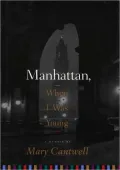
Mary Cantwell, who has been a writer and editor at Mademoiselle and Vogue and a writer at the New York Times, gives us an elegant and lyrical autobiographical account of a time and place that for some exists only in imagination. But this is a life as it was actually lived, with romance, passion, and no little share of pain. Like her earlier, warmly received American Girl: Scenes from a Small-Town Childhood, Cantwell's new book "offers many of the pleas-ures more usually associated with the novel" (Washington Post Book World). In five different apartments in Manhattan, each with its own character and charm, Cantwell's story winds through its phases, from single working girl to young wife and mother, from career choices and divorce to rediscovery. The world Cantwell inhabits - that of magazine and book publishing and fashion and the middle-class bohemia of downtown New York at a golden moment in time - is brought beautifully to life in a memoir that is sure to win her new readers and renSynopsis
A “wonderful memoir” of a woman’s life as a fashion-magazine writer in 1950s and ’60s New York (Publishers Weekly). Mary Cantwell arrived in Manhattan one summer in the early 1950s with eighty dollars, a portable typewriter, a wardrobe of unsuitable clothes, a copy of The Poems of Gerard Manley Hopkins, a boyfriend she was worried might be involved with the Communists, and no idea how to live on her own. She moved to the Village because she had heard of it, and worked at Mademoiselle because that was where the employment agency sent her. In this evocative and unflinching book, Cantwell recalls the city she knew back then by revisiting five apartments in which she lived. Her memoir vividly recreates both a particular golden era in New York City and the sometimes painful, sometimes exhilarating process of forging a self.Editorials
Publishers Weekly -
With every address in this wonderful memoir, Cantwell examines her voyage through a life filled with gifts and hurts that twist and weave as recklessly as a Greenwich Village street. Our trip begins in 1953 at 148 Waverly Place, where new college graduate Cantwell lives in a dilapidated town house and launches her career in publishing as a secretary at Mademoiselle. We witness Cantwell's blossoming relationship with her bohemian, Jewish future husband, identified here only as B., and the terrors that bear down on her from her Irish-Catholic upbringing, such as the mortal-sin guilt she felt at the prospect of using a diaphragm. The only home she ever had outside the Village was 301 East 21st Street, where Cantwell's married life got off to a stumbling start, her dislike of sex became apparent and her migraines began. The couple moved to 224 West 11th Street, where B. started a successful publishing career. The couple's next flat was at 21 Perry Street, where B.'s ``certainties fed my nothingness,'' but soon, Cantwell writes, she became pregnant and ``God loved me.'' She writes wonderful pages on pregnancy and the birth of her daughter Katherine. She speaks of her fear of injuring the baby and admits ``that once upon a time I was crazy.'' But with Katherine's birth, Cantwell found that ``sex was okay now, because now I knew what it was for.'' And with the arrival of their second child, Margaret, there was the move to 44 Jane Street. Here Cantwell's career at Mademoiselle took off and her husband started to have affairs. Sickness in her daughters was traced to her husband's genes, and she knew she had ``married a killer.'' The heart-wrenching disintegration of the marriage began: the silences, the threats and the anticlimactic divorce, out of which a new woman was born. With this paean to Village life and the maturation of her own self, Cantwell (American Girl) has written such an intimate book that the reader will feel like a joyful voyeur peeking into the window of her life. (Sept.)Library Journal
Like Willie Morris's New York Days (LJ 8/93), Cantwell's follow-up to American Girl (LJ 4/1/92) evokes a place and time experienced vividly in youth and remembered fondly in maturity. While Morris recalls a turbulent 1960s New York City, full of noise and ego, Cantwell's memories of Manhattan in the 1950s and early 1960s are quieter, more intimate, but no less romantic or powerful. She divides her memoir into five sections, each connected to an address where she had once lived. From 148 Waverly Place where Cantwell and her college roommate struggled to survive their first year in New York as single working girls (shades of My Sister Eileen and those other wonderful 1950s "career gal" movies) to 44 Jane Street, which witnessed the dissolution of her marriage and the launch of her editorial career at Mademoiselle, Cantwell reflects on the changes that affected not only her life but also her city. Beautifully written, strongly recommended. [Previewed in Prepub Alert, LJ 5/1/95.]-Wilda Williams, "Library Journal"School Library Journal
YA-An easy-to-read autobiographical account of a fashion-magazine writer in the 1950s. Fresh out of college, Cantwell arrived in Greenwich Village and shared an apartment with a friend. Despite all the flair of metropolitan life, experiences with high-style department stores, exclusive little shops, theaters, parties, restaurant outings, and even a romance and marriage, she became increasingly depressed. Her close ties to a lovingly encouraging father were broken by his early death. She details the passsage of years by describing the flats, houses, and apartments she lived in and the jobs lost and gained in her career pursuit. Despite Cantwell's lifelong involvement with psychoanalysis, her account is enlivened with the cheerful glamor of little black dresses, Steuben glassware, ethnic neighborhoods, and the whole ambiance of the city, presenting anew the eternal charm of the Big Apple for the young.-Frances Reiher, King's Park Library, Fairfax, VAJanet St. John
Former writer and editor for "Vogue" and "Mademoiselle", Cantwell locates her memories of work, friends, marriage, and motherhood in the places where she's dwelled. Five Manhattan apartments act as mental guide in retracing the footsteps of her past. From neurosis and near anorexia to the awe of her first Paris trip, Cantwell's memoir speaks intimately, honestly, and in a generous way that makes readers feel as though they were listening to a personal account retold only for them. Her earlier work, "American Girl: Scenes from a Small-Town Childhood" (1992), garnered attention and praise for the strength of its language, choice of details, and resonance of subject matter. This book, too, has all that plus Manhattan's eloquence in the 1950s and 1960s. Although this chronicle could easily succumb to politically correct revisions of the past or become a sentimental trip down memory lane, Cantwell avoids those pitfalls through sincerity--a true attempt to recall accurately and learn from her past. Somewhat literary, offering a little superficial fashion world "glam" and New York savvy, this book should appeal to many different kinds of readers.Book Details
Published
September 18, 1995
Publisher
Houghton Mifflin Harcourt
Pages
214
ISBN
9780547728261