
Settings & Atmosphere - Fiction, Politics & Social Issues - Fiction, War & Military Fiction, Literary Styles & Movements - Fiction, Character Types - Fiction, Historical Fiction
Log in to track your reading progress.
Overview
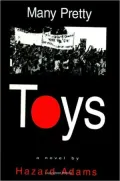
When Nixon orders the bombing of Cambodia, the resulting protests push a West Coast university to the brink of anarchy, altering irrevocably the lives of students and faculty and disrupting the process of storytelling itself. Through the words of two professors and a communal voice known only as "We," Hazard Adams interweaves the political, literary, and philosophical developments of the time into a story in which generations and their histories meet, as well as literary styles and methods, showing how political and intellectual events play on the consciousness of a range of characters. The spirit here is serious and generous, but not without a satirical element as a communal group attempts to establish an elusive identity. With a remarkable breadth of method, Adams deliberately evades the usual literary classifications.Editorials
Publishers Weekly -
Adams's shrewd tale of Vietnam-era idealism on a college campus plays out with dignity and intelligence. The novel masquerades as a reasoned reconsideration of civil disobedience at a small Pacific Northwestern university in 1969-1970. Adams offers alternating perspectives by the self-righteous student senate, called simply "We"; a fiery and dramatic history professor named Edward Williams; a "co-ed's dream" English professor named Martin Emory; and the Author (as a nod to postmodern skepticism about the relevance of authorship). In protesting the Vietnam War, students derail their classes with clamorous argumentation and then stage a sit-in at the campus library. Almost overnight, student Olivia Scott changes from a blithe young spirit into an angry activist. Dynamic artist Tom Righter attempts a strategic disruption of Williams's lecture only to find himself violently engaged with the erotic cross-currents of campus politics. The narrative's explosive and seemingly haphazard progress does not deter its didactic efforts; on the contrary, it enhances the novel's caustic integrity by hiding the author's hand. Despite a highly tongue-in-cheek (and less than believable) roster of faculty, and a predominantly reserved tone, Adams consistently displays concern for an endemic breakdown in communications between students and faculty that echoes the chaotic logic of the Vietnam War itself. The "toys" of the novel's title are less the terms of the debate (rife with abstractions like "freedom," "establishment" and "justice") than the characters themselves, who sacrifice more than they bargained for in their attempts to organize. In Adams's (The Academic Tribes) hand, the disjointed tale of disillusioned academics succeeds as an engrossing exploration of the ethics of protest. (Mar.)Library Journal
This intriguing novel is experimental in style and postmodern in sensibility. Set on a college campus in the Pacific Northwest during the tumultuous years of 1969 and 1970, it explores a variety of responses to the tragic bombing of a campus building that claims two lives, including that of a young, gifted student, Olivia Scott, who may or may not have been involved in the bombing. Adams constructs the novel from fragments--journal entries, selections from a memoir, and commentary by a group of people identified as "We" that resembles a Greek chorus and represents the student body. All the characters given voice in these fragments seek to understand how this tragedy might have been avoided. Adams, an academic (The Book of Yeats's Vision, Univ. of Michigan, 1996), uses these multiple perspectives to explore troubling questions about the provisionality of "truth" and "reality" and to reveal a community so torn by distrust, anger, and misperception that violence becomes almost inevitable. A strong and challenging book; recommended for libraries with large modern fiction collections.--Patrick Sullivan, Manchester Community-Technical Coll., CTBooknews
A novel that evades the usual literary classifications, exploring repercussions of university protests against the Vietnam War. Through the words of two professors and a communal voice known only as "We," the author interweaves political, literary, and philosophical developments of the time into a story in which generations and their histories meet. No index. Annotation c. by Book News, Inc., Portland, Or.Kirkus Reviews
A debut novel set in the late '60s, describing the turmoil that overtakes a group of faculty and students at an American university.Book Details
Published
September 30, 2009
Publisher
State University of New York Press
Pages
245
ISBN
9780791493441