
Chinese History, Communism, Historical Biography - Asia, Labor Leaders, Activists, & Social Reformers, Political Biography, Asia - Political Biography
Log in to track your reading progress.
Overview
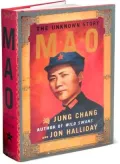
Based on a decade of research and on interviews with many of Mao’s close circle in China who have never talked before--and with virtually everyone outside China who had significant dealings with him--this is the most authoritative life of Mao ever written. It is full of startling revelations, exploding the myth of the Long March, and showing a completely unknown Mao: he was not driven by idealism or ideology; his intimate and intricate relationship with Stalin went back to the 1920s, ultimately bringing him to power; he welcomed Japanese occupation of much of China; and he schemed, poisoned and blackmailed to get his way. After Mao conquered China in 1949, his secret goal was to dominate the world. In chasing this dream he caused the deaths of 38 million people in the greatest famine in history. In all, well over 70 million Chinese perished under Mao’s rule--in peacetime.Combining meticulous research with the story-telling style of Wild Swans, this biography offers a harrowing portrait of Mao’s ruthless accumulation of power through the exercise of terror: his first victims were the peasants, then the intellectuals and, finally, the inner circle of his own advisors. The reader enters the shadowy chambers of Mao’s court and eavesdrops on the drama in its hidden recesses. Mao’s character and the enormity of his behavior toward his wives, mistresses and children are unveiled for the first time.
This is an entirely fresh look at Mao in both content and approach. It will astonish historians and the general reader alike.
Editorials
Michiko Kakutani
Not only does their book demolish many of the myths Mao perpetrated about himself - myths that were believed by a host of Westerners, ranging from Simone de Beauvoir to Henry Kissinger and Richard Nixon - but it also serves up a far more scathing portrait of the Chinese leader than those laid out by recent biographers like Philip Short and Jonathan Spence.— The New York Times
Nicholas D. Kristof
… this is a magisterial work. True, much of Mao's brutality has already emerged over the years, but this biography supplies substantial new information and presents it all in a stylish way that will put it on bedside tables around the world. No wonder the Chinese government has banned not only this book but issues of magazines with reviews of it, for Mao emerges from these pages as another Hitler or Stalin.— The New York Times Sunday Book Review
John Pomfret
In short, if you're hoping for staid, balanced scholarship, don't read this book. It's not history; it's a screed, albeit a screed on the side of the angels…Even screeds have their place, however, and this is an extremely entertaining one. Indeed, sometimes an emotionally charged account—one written with obvious biases—can reveal the truth better than ostentatious, morally numbed objectivity that cloaks a lot of Western scholarship on China. Chang and Halliday's point is very simple: Like a small group of scholars in China, they believe that Mao wasn't a revolutionary but a monster. He wasn't a communist but a bandit king. The result is a page-turner with a point.—The Washington Post
Publishers Weekly
Jung Chang, author of the award-winning Wild Swans, grew up during the Cultural Revolution; Halliday is a research fellow at King's College, University of London. They join forces in this sweeping but flawed biography, which aims to uncover Mao's further cruelties (beyond those commonly known) by debunking claims made by the Communist Party in his service. For example, the authors argue that, far from Mao's humble peasant background shaping his sympathies for the downtrodden, he actually ruthlessly exploited the peasants' resources when he was based in regions such as Yenan, and cared about peasants only when it suited his political agenda. And far from having founded the Chinese Communist Party, the authors argue, Mao was merely at the right place at the right time. Importantly, the book argues that in most instances Mao was able to hold on to power thanks to his adroitness in appealing to and manipulating powerful allies and foes, such as Stalin and later Nixon; furthermore, almost every aspect of his career was motivated by a preternatural thirst for personal power, rather than political vision. Some of the book's claims rely on interviews and on primary material (such as the anguished letters Mao's second wife wrote after he abandoned her), though the book's use of sources is sometimes incompletely documented and at times heavy-handed (for example, using a school essay the young Mao wrote to show his lifelong ruthlessness). Illus., maps. (Oct. 21) Copyright 2005 Reed Business Information.KLIATT
Jung Chang, acclaimed author of Wild Swans, and her husband, historian Jon Halliday, spent a decade conducting interviews and archival research to deconstruct the myth of Chairman Mao, a myth that is on the whole still perpetuated by China's current Communist regime. Chang and Halliday's method: to consult every available archive, to listen to every cable they could find between Peking and the Kremlin before and during the 27 years Mao ruled, and to interview every living soul somehow connected to Mao in and out of mainland China, including the exiled Dalai Lama, Henry Kissinger, Mao's daughter Li Na, George H.W. Bush, and such esoteric sources as Shi Da-zheng, son of the film director who was the first famous cultural figure to commit suicide after the Communist takeover. Their list goes on and on, and makes this biography the magisterial work that it is. The authors' most pressing contention, painstakingly substantiated, is that Mao, during his nefarious reign, starved and overworked 70 million of his people to death. Over half perished during the Great Famine of 1958—1961, a period Mao deemed the Great Leap Forward. These people died during peacetime because Peking mandated exporting vast amounts of food to countries capable of providing Mao's military with nuclear weapons. It was this Superpower Program more than anything else that fueled his ambitions, that made him instill terror and hate campaigns that created a nation of hundreds of millions of petrified, brainwashed, starving people. Meanwhile, the Chairman himself lived a life of extreme comfort and extravagance in grandiose villas built specifically for him all across China. The authors tread harshly on themythology of Mao, revealing a man with little if any ideological passion. Instead, he had a love for bloodthirsty thuggery. Mao's China was "run by terror and guarded like a prison." Chang and Halliday's book is both the fascinating revelation of Mao's improbable rise to power and the fierce, long-awaited condemnation of his deadly practices once he got there. At times they seem a little too quick to denounce every single one of his actions and sometimes present him as so much of a solipsistic psychopath that we wonder how he was possibly able to conquer the biggest country in the world. Nevertheless, their research indelibly destroys any claim to Mao's legitimacy. The narrative gives minute-by-minute details of famous events and is truly chilling in what it uncovers.Library Journal
In Wild Swans: Three Daughters of China, Chang detailed the experiences of her parents, early revolutionaries and high officials in Communist China, and her own adventures as a rabid Red Guard in Mao's Cultural Revolution of the 1960s (when Halliday was likewise a Mao enthusiast). Their disillusionment with Mao paralleled the party's conversion in the 1980s to Deng Xiaoping's "market socialism." Chang and Halliday make devastating use of insider gossip, published scholarship, and archives to build a detailed story of a mad, lusting Mao with neither ideals nor scruples. Scholars may see this as a prosecutor's indictment that does not explain Mao's successes, however perverse, and blames him as an individual for all woes. Some charges seem exaggerated or tendentious-for instance, the dramatic opening statement that Mao was "responsible for well over 70 million deaths," more than any other 20th-century leader. Yet the thrust of the argument is necessary and rings true. The book, while officially banned in the People's Republic, will undoubtedly be widely read there. A controversial, highly significant, and compellingly readable biography that should be in every library.-Charles W. Hayford, Northwestern Univ., Evanston, IL Copyright 2005 Reed Business Information.Kirkus Reviews
In the spirit of The Black Book of Communism (1999), this grand narrative aims to show that Mao Tse-tung was among the greatest mass murderers in history-if not the greatest of them all. "Mao Tse-tung, who for decades held absolute power over the lives of one-quarter of the world's population, was responsible for well over 70 million deaths in peacetime, more than any other twentieth-century leader," write China-born memoirist Chang (Wild Swans, 1991) and British historian Halliday in their provocative opening. Mao's rise was improbable, argue the authors, because he was a rotter and an opportunist, and everyone knew it. As a young man, Mao read diligently, and the conclusions he took away from world history were that he was above the law and that "giant wars" were the normal order of things. Just so, late in life, having whipped up the chaos of the Cultural Revolution, Mao warned a palace guard, "Don't cultivate connections. . . . Don't have photographs taken with people." He lived by such rules. Self-serving and secretive, Mao was ostracized by the Soviet-led leadership in the early days of the Communist Party; far from leading the Long March, by this account, Mao was borne into the mountains on a litter, half because of illness, half because it suited his imperial character, though he almost didn't get to go at all. Still, amazingly, he managed to play off rivals and scheme his way to absolute rule, and woe to anyone who crossed him. Chang and Halliday document at length just how willing Mao was to kill innocents for presumed crimes or mere expediency, how quick he was to concoct schemes against even such essential comrades as Lin Baio and Chou En-Lai-and how willing the leaders of theworld, among them Richard Nixon, were to bow to Mao's wishes. A startling document, one that will surely occasion revision of the historical record. First printing of 75,000Book Details
Published
October 18, 2005
Publisher
Us Imports
Pages
832
Format
Hardcover
ISBN
9780679422716