
Japanese Literature - Literary Criticism, Japanese Poetry, General & Miscellaneous Asian Poetry - Literary Criticism
Available on Bookshop
Write a review
Books.org participates in affiliate programs including Bookshop.org and the Amazon Services LLC Associates Program. We may earn a commission from qualifying purchases made through links on this page, at no additional cost to you.
Log in to track your reading progress.
Overview
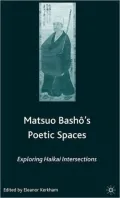
This collection of essays explores certain neglected aspects of this haikai master's literary and philosophical contributions. Haikai is an art that parodies and often subverts its linguistic, generic, and personal predecessors, and its intersections include imaginative links to the rest of Japanese literature and culture, to Chinese prose and poetry, and to the social, intellectual, and everyday realities of seventeenth century Tokugawa life.
Synopsis
This collection of essays explores certain neglected aspects of this haikai master's literary and philosophical contributions. Haikai is an art that parodies and often subverts its linguistic, generic, and personal predecessors, and its intersections include imaginative links to the rest of Japanese literature and culture, to Chinese prose and poetry, and to the social, intellectual, and everyday realities of seventeenth century Tokugawa life.
Editorials
From the Publisher
"The level of scholarship is high and in some respects the book is groundbreaking."--Choice "This book does much to deepen our understanding of the work, and of the larger significance, of Japan’s most revered haiku poet. There is no other work available in English which touches on so many aspects of his genius; now, with the help of these various sophisticated essays, the reader can come closer to Bashô as a thinker, a poet, and a painter. At this point in the development of haiku and Bashô studies, one could not ask for more."--Thomas Rimer, Professor of Japanese Literature, emeritus, University of Pittsburgh “This is a collection of wide-ranging and original scholarship. Taken together, the essays are groundbreaking in their attention to the full range of Basho's literary and artistic activities as well as to Basho's connections to the Daoist, Buddhist, and Neo-Confucian traditions.”--Laurel Rasplica Rodd, Professor of Japanese and Comparative Literature, University of Colorado “This collection is a kaleidoscopic tour de force where the most important texts of the several genres Bashô worked in—hokku, linked verse, haikai prose, and pictures for his verses—are examined in turn by scholars from both Japan and America. Each shines a different prismatic light on Bashô’s texts and contexts, especially in relation to Chinese literature; Taoist, Buddhist, and Neo-Confucian thought in particular; and, most compellingly, his rich sub-textual relationship with the Zhuangzi. The attention to visuality, too--both in texts and pictures--is a welcome addition to the field.”--Joshua S. Mostow, University of British Columbia "This collection of essays should capture the interest of those who have long admired Basho's writings as well as those who may be encountering his artistry for the first time. The variety of approaches taken in analyzing individual verses, haikai no renga, haibun, haiga sketches, and the totality of Basho's life's work create links--some close, some distant--that move the reader toward a deeper understanding of Japan's best known poet."--Susan Matisoff, Professor of Japanese, University of California, Berkeley
Book Details
Published
November 1, 2006
Publisher
Palgrave Macmillan
Pages
288
Format
Hardcover
ISBN
9781403972583