
Women's Biography, Labor Leaders, Activists, & Social Reformers, US & Canadian Literary Biography, Women's Biography, Gay & Lesbian Biographies
Log in to track your reading progress.
Overview
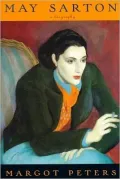
The first biography of May Sarton: a brilliant revelation of the life and work of a literary figure who influenced her thousands of readers not only by her novels and poetry; but by her life and her writings about it. May Sarton's career stretched from 1930 (early sonnets published in Poetry magazine) to 1995 (her journal At Eighty-Two). She wrote more than twenty novels, and twenty-five books of poems and journals. The acclaimed biographer Margot Peters was given full access to Sarton's letters, journals, and notes, and during five years of research came to know Sarton herself - the complex woman and artist. She gives us a compelling portrait of Sarton the actress, the poet, the novelist, the feminist, the writer who struggled for literary acceptance. She shows us, beneath Sarton's exhilarating, irresistible spirit, the needy courtier and seducer, the woman whose creativity was propelled by the psychic drama she created in others.Editorials
Publishers Weekly -
In her last years, Sarton (1912-1995) worried to a friend, "I have been so depressed at the way I may be massacred by a biographer." In this authorized life of the poet and novelist, Sarton's wounds are self-inflicted. Peters (The House of Barrymore) concedes that Sarton "will never be considered a great writer" and that she "literally made her own reputation" through personal appearances, wowing fervid campus, feminist and lesbian audiences. The most devastating testimony against her, however, emerges from Sarton's own words and from the anger of her many betrayed lovers, some of them discarded muses whose inspirational services were no longer required. As one companion put it, Sarton was "the ardent initiator-a river of fire"-until their affair ruptured on the appearance of a new muse. The biography becomes a litany of book titles (19 novels, 15 poetry collections, 13 memoirs and journals) and descriptions, often striking, of the women sought after and usually subjugated by the "emotionally ravenous" Sarton, who was "incapable of spending more than a few consecutive days in her own company" yet was "impossible to live with." As fair to her subject as the facts permit, Peters, who interviewed Sarton at length in her last years, observes that her subject "never learned a code of honor or responsibility" and could seldom be self-critical. Nor could her publisher, Peters contends, accusing W. W. Norton of "promoting mediocrity" by rushing into print almost everything submitted by "their golden goose," even when written "on automatic pilot." The reader's interest fades as Sarton's "heavy psychic baggage" and overproduction prove too much for her biographer to overcome. Ninety-seven photos illustrate Sarton and the people in her tempestuous life.Publishers Weekly -
In her last years, Sarton (1912-1995) worried to a friend, "I have been so depressed at the way I may be massacred by a biographer." In this authorized life of the poet and novelist, Sarton's wounds are self-inflicted. Peters (The House of Barrymore) concedes that Sarton "will never be considered a great writer" and that she "literally made her own reputation" through personal appearances, wowing fervid campus, feminist and lesbian audiences. The most devastating testimony against her, however, emerges from Sarton's own words and from the anger of her many betrayed lovers, some of them discarded muses whose inspirational services were no longer required. As one companion put it, Sarton was "the ardent initiatorDa river of fire"Duntil their affair ruptured on the appearance of a new muse. The biography becomes a litany of book titles (19 novels, 15 poetry collections, 13 memoirs and journals) and descriptions, often striking, of the women sought after and usually subjugated by the "emotionally ravenous" Sarton, who was "incapable of spending more than a few consecutive days in her own company" yet was "impossible to live with." As fair to her subject as the facts permit, Peters, who interviewed Sarton at length in her last years, observes that her subject "never learned a code of honor or responsibility" and could seldom be self-critical. Nor could her publisher, Peters contends, accusing W. W. Norton of "promoting mediocrity" by rushing into print almost everything submitted by "their golden goose," even when written "on automatic pilot." The reader's interest fades as Sarton's "heavy psychic baggage" and overproduction prove too much for her biographer to overcome. Ninety-seven photos illustrate Sarton and the people in her tempestuous life. (Mar.)Library Journal
With the blessings and cooperation of May Sarton (1912-95), literary biographer Peters, an English professor formerly at the University of Wisconsin, provides an in-depth look into the character, personality, and private life behind the inspirational and dynamic poet, novelist, essayist, journal writer, feminist, and lesbian. Peters chronicles a life full of turbulence, pain, loneliness, neediness, and passion. This biography dispels any myth that Sarton's writing was effortless, portraying the writer's never-ending need for a Muse and the numerous women who played this role. Peters offers a well-written, compelling literary biography to which readers will respond with emotions ranging from empathy, sympathy, awe, and admiration to disgust and disbelief that an artist who produced works that provided inspiration for so many lived with much misery and dissatisfaction. Highly recommended.-Jeris Cassel, Rutgers Univ. Libs., New Brunswick, N.J.Book Details
Published
November 13, 1997
Publisher
New York : Knopf, 1997.
Pages
474
Format
Hardcover
ISBN
9780679415213