
Civil Rights - General, Civil Liberties, Marketing - Products & Services - General & Miscellaneous, Media - General & Miscellaneous, Mass Media & Politics, Democracies & Republics - General & Miscellaneous, Constitutions, Communications & Media Law, Censo
Available on Bookshop
Write a review
Books.org participates in affiliate programs including Bookshop.org and the Amazon Services LLC Associates Program. We may earn a commission from qualifying purchases made through links on this page, at no additional cost to you.
Log in to track your reading progress.
Overview
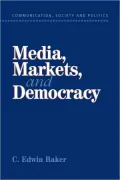
The mass media and free press should serve people both as consumers and as citizens. Critics claim that government interventions in media markets prevent audiences from getting the media products they want. Political theorists assert that a free press is essential for democracy. The critics' claim is incorrect and the theorists' assertion is inadequate as a policy or constitutional guide. Even if markets properly provide for people's desires or preferences for most products, Part I of this book shows that unique aspects of media products systematically cause markets to fail in respect to them. Part II shows that four prominent, but different, theories of democracy lead to different conceptions of good journalistic practice, good media policy, and proper constitutional principles. While implicitly favoring a theory of "complex democracy," Part II makes it clear that the choice among democratic theories is crucial for understanding what should be meant by a free press. Part III explores one currently controversial issue - international free trade in media products. Contrary to the American negotiating position relating to media products, both economic and democratic theory justify deviations from free trade.Book Details
Published
November 1, 2001
Publisher
Cambridge University Press
Pages
392
Format
Hardcover
ISBN
9780521804356