
Classical Conductors, Directors, & Musicians - Biography, Musical Conducting
Log in to track your reading progress.
Overview
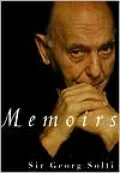
In these pages Sir Georg Solti relives an unparalleled musical life: his musical studies in Budapest with Dohnányi, Kodály, and Bartók; his exile in Zurich during World War II; his work as music director of the Bavarian State Opera in postwar Munich and similar posts in Frankfurt and London’s Covent Garden; his brilliant direction of the Chicago Symphony (1969–1991); and his freelance conducting of the world’s greatest orchestras. By turns touching and amusing, his recollections of such luminaries as Strauss, Stravinsky, Toscanini, Walter, Furtwängler, Klemperer, Nilsson, and Domingo fill this memoir with musical pleasure.Synopsis
In these pages Sir Georg Solti relives an unparalleled musical life: his musical studies in Budapest with Dohnányi, Kodály, and Bartók; his exile in Zurich during World War II; his work as music director of the Bavarian State Opera in postwar Munich and similar posts in Frankfurt and London’s Covent Garden; his brilliant direction of the Chicago Symphony (1969–1991); and his freelance conducting of the world’s greatest orchestras. By turns touching and amusing, his recollections of such luminaries as Strauss, Stravinsky, Toscanini, Walter, Furtwängler, Klemperer, Nilsson, and Domingo fill this memoir with musical pleasure.
The New York Times Book Review - Paul Driver
[A] zestful book by a man whose. . .appetite for work and life comes across as genuinely inspiring.
Editorials
Paul Driver
[A] zestful book by a man whose. . .appetite for work and life comes across as genuinely inspiring.— The New York Times Book Review
Publishers Weekly -
The renowned conductor, best known in the U.S. for his exciting years at the head of the Chicago Symphony, died, at 84, just as his memoir was published, busy to the end, on the podium and in the recording studio. Perhaps, in fact, he was too busy to concentrate sufficiently on his book, for considering how remarkable his life had been, and how powerfully dynamic a figure he cut in 20th-century musical life, it is a rather lackluster affair. In a straightforward, colorless style he describes his childhood in Budapest, music lessons with the likes of Bartk and Kodly, then his exile, as a Jew, to wartime Switzerland, and a life of making do by playing piano accompaniments and working odd jobs as a singing coach. At the end of the war he was rushed into Germany by the Americans to help restart its shattered musical life, gaining swift experience at major opera houses before catching the attention of a London record company and finally accepting a position as music director at Covent Garden. He came into his own as a symphonic conductor in Chicago, where in his 22-year reign he led the orchestra to world renown, and is now a much sought-after freelance whose later performances (he likes regularly to rethink his approach to the standard repertoire) reflect an increasing mellowness compared to an early powerhouse brashness. All this is fairly set forth, along with his views on conducting Beethoven, Mozart, Bruckner, Mahler and other of his favorites; what is lacking in the book is a sense of excitement of the kind his music-making has often brought. There are few anecdotes of much interest, very little reflection on the many famous musicians he has known, not much on his family, his world view or moments of spectacular triumph or despair. Solti deserves a chronicler livelier than himself.Library Journal
'I have had an enormously lucky life,' confides Solti in the epilogue of this immensely satisfying memoir. And we, the beneficiaries of his musical genius, have been even luckier. To fans of Sir George, this splendid volume of reminiscences will confirm his status as one of the preeminent conductors of this century. Solti's graciousness, warm-hearted generosity, and bonhomie shine forth from every page. The first six chapters are named after significant cities in the maestro's life; here, Solti's early years as an assistant in the opera houses of Hungary through his lengthy, triumphant tenure as conductor of the Chicago Symphony are lovingly recounted. Chapter 7, 'The World,' reflects the author's status as an international citizen. In the final chapter, 'Music, First and Last,' Solti comments at length on his favorite composers and their works with many anecdotal asides. Because Solti died a few months after completing these memoirs, his enthusiastic plans for future recording projects and programming will not be realized, making this autobiography his final accomplishment.-- Larry A. Lipkis, Moravian College, Bethlehem, PennsylvaniaLibrary Journal
'I have had an enormously lucky life,' confides Solti in the epilogue of this immensely satisfying memoir. And we, the beneficiaries of his musical genius, have been even luckier. To fans of Sir George, this splendid volume of reminiscences will confirm his status as one of the preeminent conductors of this century. Solti's graciousness, warm-hearted generosity, and bonhomie shine forth from every page. The first six chapters are named after significant cities in the maestro's life; here, Solti's early years as an assistant in the opera houses of Hungary through his lengthy, triumphant tenure as conductor of the Chicago Symphony are lovingly recounted. Chapter 7, 'The World,' reflects the author's status as an international citizen. In the final chapter, 'Music, First and Last,' Solti comments at length on his favorite composers and their works with many anecdotal asides. Because Solti died a few months after completing these memoirs, his enthusiastic plans for future recording projects and programming will not be realized, making this autobiography his final accomplishment.-- Larry A. Lipkis, Moravian College, Bethlehem, PennsylvaniaBooknews
Solti, one of the leading conductors of the century, died September 5th, 1997--only hours after completing the final corrections to this book. His memoir traces his life from his native Budapest through the great music centers of the west. In it, he expresses his thoughts and feelings about great musicians and composers, writes about conducting and about great works, and offers insights into his professional, intellectual, and emotional development. Annotation c. by Book News, Inc., Portland, Or.Paul Driver
[A] zestful book by a man whose. . .appetite for work and life comes across as genuinely inspiring. -- The New York Times Book ReviewKirkus Reviews
A behind-some-of-the-scenes look at the life and thoughts of one of the 20th century's greatest conductors. A selective recollection of Sir Georg Solti's rise to musical fame, it's an entertaining if not particularly probing walk through this man's impressive musical life. Solti, who died at 84, was born in Hungary but lived much of his life in Switzerland, where he relocated at the beginning of WW II. Solti describes his climb through the ranks, beginning his career as a répétiteur, or opera coach. Eventually, through hard work and determination, he became the conductor of the Royal Opera at Covent Garden in England and finally of the Chicago Symphony, which he directed for 22 years and where he arguably set a musical standard for professional orchestras that still stands today. The book includes some introspection, such as Solti's admission that early in his career he neglected to really listen to a group before trying to stamp his own personality on it. The book is best when Solti describes his musical philosophies and what it means to be a conductor. Conductors, he writes, 'should always remember our role as interpreters; we are there to serve with the best of our technical abilities the wishes of the composers, who are the creators. The thrill comes when we as interpreters become partners with the composers at the moment the scores comes to life in a performance.' Conductors and musicians will find Solti's discussion of Beethoven's various symphonies especially illuminating. Unfortunately, these pithy parts are too infrequent, leaving a reader at book's end still wondering exactly what makes Solti tick. An adequate rendering by a man renowned in the musical world forhis excellence.Book Details
Published
October 1, 1998
Publisher
Chicago Review Press, Incorporated
Pages
288
Format
Paperback
ISBN
9781556523373