
Horror Films, Sex Role & the Media, Feminism & Feminist Theory, Social Themes in Motion Pictures, Women in Entertainment & Media, Film Critics & Criticism, Women and Film
Log in to track your reading progress.
Overview
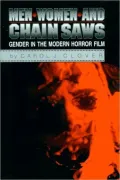
Do the pleasures of horror movies really begin and end in sadism? So the public discussion of film assumes, and so film theory claims. According to that view, the power of films like Halloween and Texas Chain Saw Massacre lies in their ability to yoke us in the killer's perspective and to make us party to his atrocities. In this book Carol Clover argues that sadism is actually the lesser part of the horror experience and that the movies work mainly to engage the viewer in the plight of the victim-hero - the figure who suffers pain and fright but eventually rises to vanquish the forces of oppression. A paradox is that, since the late 1970s, the victim-hero is usually female and the audience predominantly male. It is the fraught relation between the "tough girl" of horror and her male fan that Clover explores. Horror movies, she concludes, use female bodies not only for the male spectator to feel at, but for him to feel through. The author concentrates on three genres in which women and gender issues loom especially large: slasher films, satanic possession films, and rape-revenge films, especially those in which the victim is from the city and the rapists from the country. Her investigation covers over two hundred films, ranging from admired mainstream examples, such as The Accused, to such exploitation products as the widely banned I Spit on Your Grave. Clover emphasizes the importance of the "low" tradition in filmmaking, arguing that it has provided some of the most significant artistic and political innovations of the past two decades. Female-hero films like Silence of the Lambs and Thelma and Louise may be breakthroughs from the point of view of mainstream Hollywood cinema, but their themes have a long ancestry in lowlife horror.Editorials
Publishers Weekly -
Clover contends that contemporary horror films are not simply the misogynist fantasies that critics have made them out to be. Photos. (Apr.)Sight and Sound
[A] brilliant analysis of gender and its disturbances in modern horror films. . . . Bubbling away beneath Clover's multi-faceted readings of slasher, occult, and rape-revenge films is the question of what the viewer gets out of them. . . . [She] argues that most horror films are obsessed with feminism, playing out plots which climax with an image of (masculinized) female power and offering visual pleasures which are organized not around a mastering gaze, but around a more radical "victim-identified' look.
— Linda Ruth Williams
The Boston Globe
Carol Clover's compelling [book] challenges simplistic assumptions about the relationship between gender and culture. . . . She suggests that the "low tradition" in horror movies possesses positive subversive potential, a space to explore gender ambiguity and transgress traditional boundaries of masculinity and femininity.— Andrea Walsh
The Modern Review
Fascinating, Clover has shown how the allegedly naïve makers of crude films have done something more schooled directors have difficulty doing - creating females with whom male veiwers are quite prepared to identify with on the most profound levelsSight & Sound
[A] brilliant analysis of gender and its disturbances in modern horror films. . . . Bubbling away beneath Clover's multi-faceted readings of slasher, occult, and rape-revenge films is the question of what the viewer gets out of them. . . . [She] argues that most horror films are obsessed with feminism, playing out plots which climax with an image of (masculinized) female power and offering visual pleasures which are organized not around a mastering gaze, but around a more radical "victim-identified" look.— Linda Ruth Williams
Sight and Sound
[A] brilliant analysis of gender and its disturbances in modern horror films. . . . Bubbling away beneath Clover's multi-faceted readings of slasher, occult, and rape-revenge films is the question of what the viewer gets out of them. . . . [She] argues that most horror films are obsessed with feminism, playing out plots which climax with an image of (masculinized) female power and offering visual pleasures which are organized not around a mastering gaze, but around a more radical "victim-identified" look.The Boston Globe
Carol Clover's compelling [book] challenges simplistic assumptions about the relationship between gender and culture. . . . She suggests that the "low tradition" in horror movies possesses positive subversive potential, a space to explore gender ambiguity and transgress traditional boundaries of masculinity and femininity.Book Details
Published
July 1, 1992
Publisher
Princeton, N.J. : Princeton University Press; c1992.
Pages
276
Format
Hardcover
ISBN
9780691048024