
Join Books.org — it's free

Fiction, General & Miscellaneous Literary Criticism, World Literature, English Literature
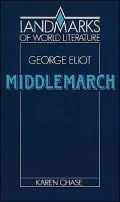
Middlemarch by George Eliot — book cover

Middlemarch

by George Eliot, Karen Chase, J. P. Stern
Available on Bookshop Write a review

Books.org participates in affiliate programs including Bookshop.org and the Amazon Services LLC Associates Program. We may earn a commission from qualifying purchases made through links on this page, at no additional cost to you.

Log in to track your reading progress.

Overview

A comprehensive introduction to Middlemarch, offering both general information and an original interpretation. It pays considerable attention to the intellectual and social context surrounding Middlemarch, and situates the work within nineteenth-century traditions of the novel in England and Europe. Karen Chase gives particular emphasis to the Woman Question in Middlemarch.

Synopsis


Middlemarch is George Eliot's masterpiece, a Victorian novel on the grandest scale. Originally published in serial form in Blackwood's Magazine in 1871-1872, it was at once a critical and popular success.

About the Author, George Eliot

Mary Ann Evans was born on November 22, 1819, at Chilvers Coton, Warwickshire, England, the last child of an estate agent. During her girlhood, she went through a phase of evangelical piety, but her strong interest in philosophy and her friendship with religious freethinkers led to a break with orthodox religion. When one of these friends married in 1843, Mary Ann took over from his wife the task of translating D.F. Strauss’s The Life of Jesus Critically Examined (1846), a work that had deep effect on English rationalism. After her father’s death she settled in London and from 1851 to 1854 she served as a writer and editor of the Westminster Review, the organ of the Radical party. In London she met she met George Henry Lewes, a journalist and advanced thinker. Lewes was separated from his wife, who had had two sons by another man, but had been unable to obtain a divorce. In a step daring for Victorian times, Mary Ann Evans began living openly with Lewes in 1854, in a union they both considered as sacred as a legal marriage and one that lasted until his death in 1878.

With Lewes’s encouragement, Mary Ann Evans wrote her first fictional work, “The Sad Fortunes of the Reverend Amos Barton,” for Blackwood’s Magazine in 1857; it was followed by two more stories published under the pseudonym George Elliot–“George” because it was Lewes’s name and “Eliot” because, she said, it was good mouth-filling, easily pronounced word.” At the age of thirty-nine she used her memories of Warwickshire to write her first long novel, Adam Bede (1859), a book that established her as the foremost woman novelist in her day. Then came The Mill on the Floss (1860), Silas Marner (1861), and Romola (1863). Her masterpiece and one of the greatest English novels, Middlemarch, was published in 1871-72. Her last work was Daniel Deronda (1876). After Lewes’s death George Eliot married John Walter Cross. He was forty; she was sixty-one. Before her death on December 22, 1880, she had been recognized by her contemporaries as the greatest living writer of English fiction.

Reviews

There are no reviews yet. Log in to write one.

Book Details

Published
August 1, 1991
Publisher
Cambridge University Press
Pages
120
Format
Paperback
ISBN
9780521359153

More by George Eliot

Similar books