
20th Century French Literary Biography, Social Change, Political Culture, France - Political Biography, 20th Century French History - Fourth & Fifth Republics, 1944 to Present, Political Sociology
Log in to track your reading progress.
Overview
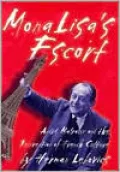
Traveling on the luxury liner France early in 1963, the Western world's most famous painting sailed across the Atlantic on its maiden voyage to the United States. President John F. Kennedy officially welcomed the Mona Lisa for her stay in the capital and New York. In two months almost two million Americans came to admire the French treasure. The goodwill generated by the loan eased U.S.French relations, which had soured over tensions stemming from the Cold War. The mastermind behind the Mona Lisa's triumphant tour was France's newly appointed minister of cultural affairs, Andr Malraux. In this engaging book, Herman Lebovics recounts how Malraux's brilliant foray into the realm of diplomacy was but one example of his efforts to employ France's cultural heritage in the service of a renewed national grandeur. Malraux's cabinet position was created in 1959 by Charles de Gaulle, who entered his presidency deeply concerned over unraveling social cohesion at home and the nation's weak standing abroad. To help him address these problems, he turned to a paragon of the engag French intellectual. Malraux was an acclaimed novelist, a daring adventurer, a flamboyant anti-colonialist and one-time leftist, a courageous resistance leader, and an inspired commentator on art. In his ten years as a cabinet minister, Malraux sought to "marry" the French people to their historic culture and to restore France to her place as artistic center of the West. Lebovics examines the successes and failures of Malraux's remarkable career and the reactions of artists, the political class, and the public to the French state's new engagement with the national culture.Editorials
Publishers Weekly -
In effect a sequel to Lebovics's earlier True France: The Wars Over Cultural Identity, 1900-1945, this volume carries his narrative into 1969, the end of de Gaulle's reign. Malraux left office with the French leader; de Gaulle had created the cabinet position of minister of culture especially for the novelist and ex-radical. Although Lebovics insists that he is not writing yet another biography of the charismatic and controversial author, he devotes a few chapters to the topic. But most of the book deals with Malraux's efforts, during his ministry, to regain European cultural primacy for a marginalized but proud postwar France. Playing a hands-on role as the "traveling salesman of French culture," Malraux escorted the Louvre's Mona Lisa and Venus de Milo to Washington and Tokyo respectively, used government resources to combat "the menacing spread of English in the world" and deployed France's ample cultural capital to retain a political edge in the postcolonial era. Still, Lebovics indicts Malraux as "a terrible administrator" who ran his office poorly, but at least permitted "plodding" and "largely tone-deaf civil servants" to do their jobs with their usual efficiency, so he could spend his time fronting for Gaullist concepts of grandeur. As France became less peasant and more bourgeois, Malraux and his ministry nationalized and homogenized French culture. How both the domestic and the international strategies were managed is a provocative story, and one can anticipate Lebovics's following it up by a third installment on Jack Lang, the most visible activist among Malraux's successors. 34 illustrations, 6 charts and graphs. (June) Copyright 1999 Cahners Business Information.Book Details
Published
May 13, 1999
Publisher
Ithaca : Cornell University Press, 1999.
Pages
246
Format
Hardcover
ISBN
9780801435652