
American & Canadian Literature, Film Genres, Genres & Literary Forms, Film History & Criticism, General & Miscellaneous Literary Criticism, English Literature
Log in to track your reading progress.
Overview
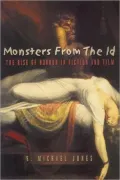
In this study of horror from to modern Hollywood, Jones (author of several critiques of contemporary culture) shows that the moral order, when suppressed, reasserts itself as an avenging monster in the midst of the chaos and suffering of cultural revolution. Following the route of the genre from its origins in France to England, Germany, and America, he argues that horror is a product of a guilty conscience that will not admit its own wrongdoing, and that individuals in the culture can escape this dynamic only by acknowledging the demands of an objective moral order. Annotation c. Book News, Inc., Portland, OREditorials
Publishers Weekly -
Viewing the horror genre through the lens of '90s style "family values," Jones, founder of Culture Wars magazine, believes that horror is an unconscious backlash against the Enlightenment and the evils of secular humanism. His argument involves a complicated causal chain with at least a few missing links: the Enlightenment subverted religion; without religion there can be no moral order; the absence of moral order has inevitably led to sexual liberation; and sexual liberation must lead to suffering and death. However, his proof for this unlikely progression remains unconvincing. Jones predicates much of his argument on the affair between Mary Godwin (future author of Frankenstein) and Romantic poet Percy Shelley. He states that their sexual immorality (i.e., free love and m nage trois) grew directly out of their Enlightenment philosophy and contributed to the suicides of Percy's first wife and Mary's half sister. Mary was "consumed by remorse" over their deaths, according to Jones, and dealt with her guilt by creating the now iconic monster, now known as Frankenstein. In this fashion, the Shelley family melodrama is projected onto an entire age. Jones is fond of shooting at little targets to make big points: he grandly concludes that the forgotten 1997 horror film Mimic represents "a complete repudiation of the Enlightenment." On occasion, Jones makes astute observations, as when he links Bram Stoker's Dracula to the 19th-century fear of syphilis, but more often he is crippled by his political agenda, which leads him to describe evolution as "pseudo-metaphysics" and LBJ's Great Society as "a front for pushing contraceptives as part of the eugenic final solution to our race problem." (Apr.) Copyright 2000 Cahners Business Information.|Book Details
Published
May 1, 2000
Publisher
Dallas, Tex. : Spence Pub. Co., 2000.
Pages
298
Format
Hardcover
ISBN
9781890626068